TMIT 49: Why We Started Teasing Our Kids
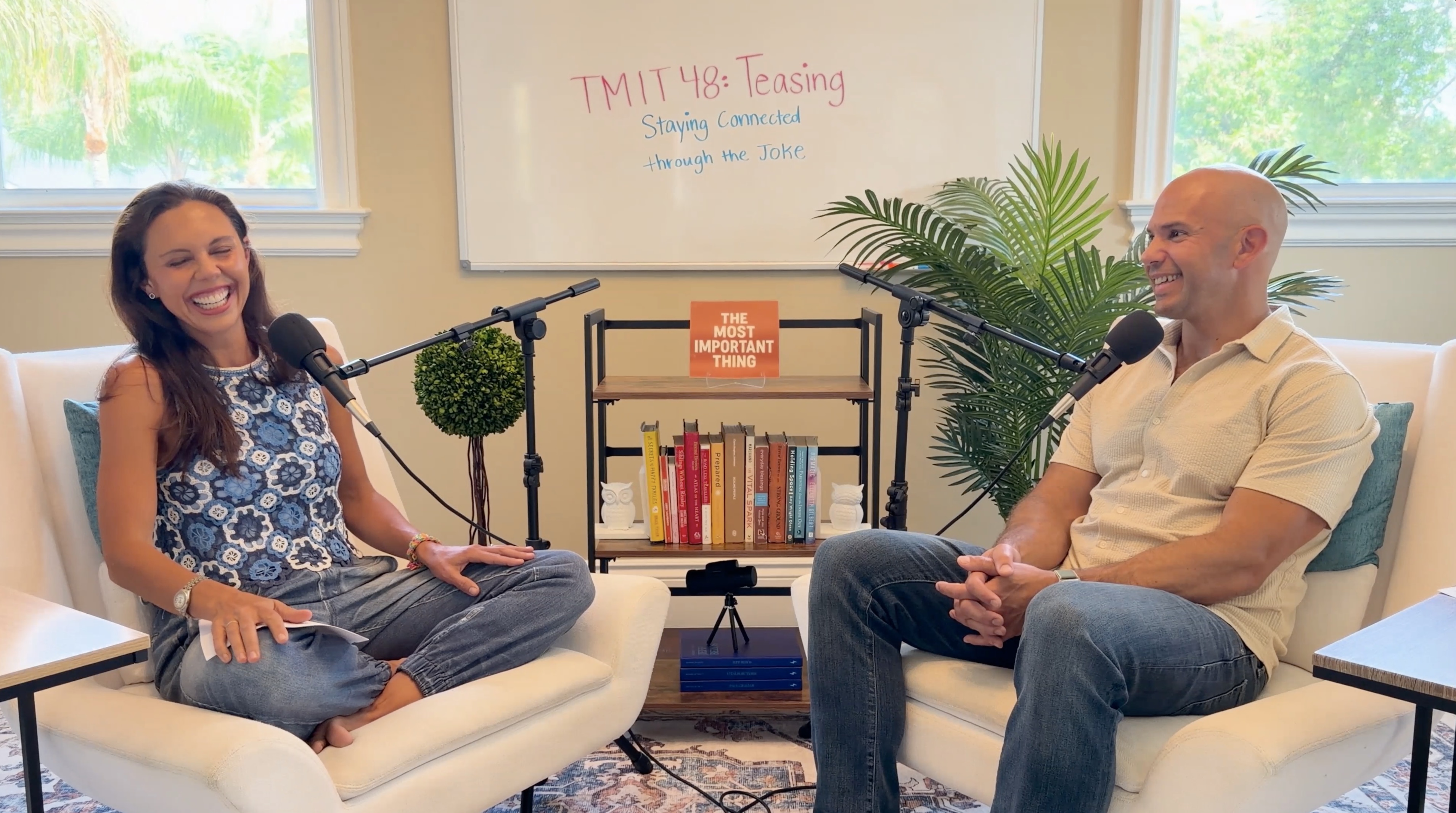


If your family over-indexes on earnest, disciplined learning, playful banter can actually feel incredibly uncomfortable. But what if raising emotionally resilient kids requires teaching them how to take—and make—a joke?
We realized our family had a massive blind spot when it came to levity. Our kids were starting to view every social nudge as a threat, and we knew we needed to intentionally build more playfulness into our home. In Episode 49, we explore the psychology behind banter and exactly why we are actively teaching our kids how to tease.
We break down the critical difference between teasing (saying something true playfully) and sarcasm (saying something untrue to imply the opposite). Sarcasm developmentally fails with young kids, leaving them feeling evaluated and insecure. Healthy teasing, on the other hand, actively strengthens bonds, signals safety, and builds emotional resilience.
We share Greg’s "Level One" framework for teaching kids self-deprecation (the "I'm sure you're shocked" method) and break down our three new family guardrails for bantering safely:
-
We only tease about competencies and strengths.
-
The person being teased gets to decide whether or not it is funny.
-
If a joke misses the mark, we immediately celebrate the repair.
Listen to TMIT 49 wherever you get your podcasts.
The healthiest families know how to lean into their strengths, learn from their mistakes, and playfully laugh at themselves along the way.
0:00 One thing I was thinking about is if we took a job at a company and the company was like day one, introduce yourself and give us ways to tease you. I think that would be pretty cool, right? What would you say? Well, we've been talking about this for the past couple of days and so now I know that from you. It's great to tease people about their strengths or things that they are, I'll say, consciously competent in, right? So for me would probably be the something people do tease me about is just the juxtaposition of me being this like heady, academic, thoughtful person who is absolutely obsessed with Bravo and like the only thing you'll see on my Instagram, like I actually got Instagram just so that I could check what's going on in the Bravo sphere.
0:52 So you'd be like, hey guys, I'm Danielle. I'm a walking contradiction, but the two things that you might find me reading about are Young in psychology and what's happening on Summer House. Exactly. Yes, I like that. I like that. That's a, that's a, that's a good one to introduce yourself with. It's, it shows your strengths. And I think that's what teasing is actually all about. It's about building connection and finding a way for us to. I'm laughing because the other thing is just, you know, the thing that the kids tease me about, that I tease myself about, that the kids love to tease me about too, is just like when I'm such a control freak. Like, do you remember when we were in Arizona and we were on a run?
1:36 I can't. And we were like a block from home and we had water bottles and I was like, Nope, we are not allowed to take a water break. We do not have time for a water break. And I was just, like, having such a controlling moment, you know, that I can laugh later. Like, that's so ridiculous. We're, like in the middle of the Arizona desert. Like let our kids drink some water. Yeah. So it's like, hey, I'm Danielle. I am all about collaboration, but I've probably come up with the answer. I. Already knew that. Yeah, right. Exactly. Yeah. We have a friend that says that. Often that always says, I already thought of that.
2:21 I think for me, I'd probably introduce myself as hey, I'm Greg. And no matter the no matter the circumstance, no matter the mood, I have a pill in my bag for that. That's true, right? That's true. I always, I haven't really thought of a specific example, but I always lightheartedly talk about how you're fancy. Yeah, 'cause you are alarmingly fancy sometimes, right in your I mean, I think you have taste and we have a wonderful life, but then there are certain things that you just don't like to get your hands dirty with.
3:02 Yes, I would agree with that. So I know we just jumped in here, but today we we're talking about teasing right and and how did this come up? I've I've I'm trying to remember. I know exactly how it came up. I was listening to one of my new favorite podcasts just because of who's in it, not because it's good. Yet. Adam Grant and Brené Brown have started a podcast called The Curiosity Shop and they were bantering and he and Adam mentioned that there are numerous pro social benefits to playful teasing. And I was like, uh huh, come again? What, like tell me more numerous pro social benefits?
3:45 I mean, anything that finished that sentence from Adam Grant, I was going to be my interest was piqued right. And then teasing is such well, it's a tricky one for me because in theory, like I love it, but I am I have no experience at it. I'm terrible at it and so I immediately dug into the research and I was so happy to see that it's what they call like a high skill social tool because I definitely am low skill in teasing. And that is trickling down to our family because when we talked about it at family meeting this week after we kind of explained and talked like very low stakes what we're thinking about experimenting with, Hunter said. Mom, this is not fun and it is too hard and I don't want to do it and I'm like, that's exactly why we're going to do it because I'm sorry that I've made you this way. And I don't even know how we got here, honestly, because my parents tell stories about epic April Fool's jokes that they've epic April Fool's pranks that have happened in our family. But somewhere along the way we kind of like lost that joke, I guess, or at least it didn't trickle down to me. But even in can I say this?
5:00 But I told you this before that like even in high school, like there was a boy that used to tease me all the time and in college a different 1. And I loved it. Like it felt so connecting and it felt like our secret thing, do you know? What I mean? Not even secret, but like our thing. And I adored that about both of these people. And you tease me too, right? And so like always, it's been and not to make it only flirty and romantic, but like my closest friends tease me and I feel safe and I feel like they see me when they tease me. Yeah, right.
5:42 Your. Your closest mom friends for sure, like your closest friends that I know from New York. They didn't tease you so. That's not true some of them. Like a little bit. Some of them. But they're really good here. I know, I know they are in the best way. Like I'm so happy about it, but it feels like to be teased feels like you see me. And I think that I'm a person that if people misconstrue me, they misconstrue me as someone who's so rigid and serious. And so the people that playfully tease me knock that down immediately. And I'm like, oh, thank God. Like I can breathe because you don't, even though I can get, I can be very articulate and I can be very persuasive.
6:29 I'm I'm still just a girl at the end of the day that wants to have fun. Totally. Yeah. I I love that you know that about yourself that yeah, I love it that the more that people can put you off the pedestal. Yes, please. And put and put you in a place where they're able to see you for your strengths and for those strengths also being sometimes overpowering and a lot. And annoying, yeah. It's great when they when it also shows that they're secure in who they are. Right, right. And that's, you know, that's honestly what I'm learning is that teasing can really strengthen feelings of connection and belonging like that kind of in Group when the relationship is secure. So I think a solid foundation is necessary. It's you shouldn't go tease just anyone, but if you have a strong relationship, teasing can only make it that much stronger, which is so cute.
7:26 And we kind of, I think we intuitively know that. Yeah, which is why it's important to teach our kids young not just about humor, but about self humor, a little self deprecation. Because showing up with self deprecation is way more welcoming and warm than showing up with I know all the answers or I'm too shy to chime in or, you know, I'm not going to raise my hand because I'm afraid of what people are going to say when I have the right answer or the wrong answer. Teaching our kids about humor and about how to joke amongst themselves and and make fun of themselves is such an important skill. It is, but to do it well, I think there's a reason why it is called this like high skill social tool, because it can easily go wrong even with people that you have secure connections with. And so I do want to talk about for, you know, the novices in teasing like me.
8:20 I, I want to break it down a little bit more. So, and before preparing for this episode, when we thought about teasing, we talked about teasing. I often thought about friends who are extremely witty and sarcastic and the way that I feel around them, which in all honesty is like, often times highly uncomfortable and like, I can't keep up. And so I do want to break down the difference between teasing and sarcasm and then we can get into it a little bit more as far as what the research shows and the dynamics. So teasing is saying something true in a playful way. Like, we're going to make an episode about teasing and you're going to break it down into a framework. Yes, exactly.
9:03 I know guys, but I think it's important. I can't be the only one that doesn't that wants to understand more about teasing. Of course not. So I I'm, I love having a framework. I just wanted to make sure that we kept it a little light. Yeah. Because it's like. And here's the three things you need to know about Teasing 123. OK, Thank you. Join us next time. Try it at home. See how it works for you? See you next time you can laugh into the mic. I'm dying, OK Ha ha ha. I'm going to meme that one.
9:52 OK, so OK, here we go. So teasing is saying something true in a playful way. Oh my gosh, I'm tearing it. Sarcasm is saying something untrue to imply the opposite, right? Two very different things. And I think even developmentally, while they both require like they're both in the category of what psychologists would call ambiguous communication, which is when the meaning is not fully in the words. So you have to really understand the content, the context and the tone. But sarcasm is not is something that the vast majority of humans do not understand at all until age 7 or 8. And even then they can grasp, oh, that is sarcasm. And this is what we're seeing with Hunter and even a little bit with Jade right now.
10:44 But they don't necessarily get what we mean, right? They're like, oh, are you being sarcastic? Right. But the meaning behind it is still a little bit lost. And just to make another note is that we have, so it seems neurotypical children, neurodivergent. Many neurodivergent children will never understand sarcasm or teasing because it's a it because of that ambiguous communication piece, right? And like take it very literally. I shouldn't say never understand, but it's going to take some true even deeper skill building is my understanding. So we're talking about this from a neurotypical dynamic right now.
11:27 I think that sarcasm and teasing sometimes go hand in hand, and I don't think that it's appropriate to bring the two together at home, at least to start. For sure, like we are going to have to start with the babiest of baby steps and teasing and I don't even know like it seems like sarcasm is a an advanced skill above and beyond like well. It's also a big megging skill, so. So here's here's two ways of being excited that somebody cleaned up their room. Let's say Hunter cleaned her room and she is notoriously messy, which she's not. But we let's just pretend here we could say, hey, Hunter, Oh my God, you cleaned up your room. It only took eight years. That doesn't feel so good because that's seeing her as doing a good thing, but delaying so long to have done that. And it's kind of bringing her down a notch, right? Whereas to say to her walking, Oh my God, this room, it's so clean, who are you and what have you done with my child? That's a really positive way of making it exciting that they've done something out of the norm and celebrating by teasing them that they are not the person that usually doesn't clean their room.
12:42 Or that you notice something about them, right? Yeah. So I think it's just like these little examples of making sure that we don't hit sarcasm at home when we think of teasing. Which by the way, I've I've already like done that fallen off the wire like I'm I'm trying, but I'm, you know, I'm continuously reminding myself only tease competencies, right? But even if I I don't even think we're there yet, where we really are is only make light of a situation like, Oh my gosh, I see the shoes on the floor exhibit is back in the laundry room this week, You know, like how exciting or myself, right, which that's kind of what our sharing the mistake of the day has turned into, which is kind of a moment where everybody makes fun of me, which is fine, which is fine. And I think your examples were very clear. However, I just want to give you the language behind it too. So from the research, when teasing is done well, it makes you feel included.
13:45 Sarcasm can make you feel evaluated, as in, there's something implied here that I need to figure out, right? And so personally, like I have, I never feel less equipped and more on the outside than when I'm in a situation which happens sometimes, particularly with in at work, like with Co workers where people are bantering and being very witty. And I don't know if I, I don't even know how to jump in. I, I often times think about double Dutch a lot, I guess because I did it a lot in elementary school. And I'm like, this is like when you're doing double Dutch with three or four ropes and it's going so fast and there's just no way that I'm going to break in.
14:33 That's a good analogy. I couldn't do it with one rope. Well, you can't really double Dutch, but you certainly can banter. Yes, yes, I can hang. I attribute that to watching every episode of The Simpsons growing up, and I'm trying to open that up to our kids, too. I think you could learn everything about humor and life by watching The Simpsons. Yeah, so basically if our home TV catalog right now is The Real Housewives of Beverly Hills for some social emotional dynamics and lifestyle. Lots of teasing in there. Yeah, it was so funny. It's so funny. The Simpsons and Full House.
15:14 Yeah, those are the three things the trifecta children are watching right now. It is. I think it's a great I couldn't trifecta. I really could not be prouder. It's true though, yeah, yeah, yeah. I would love to just nail for you the benefits of teasing 'cause I did look into the research and there are a few folks that really have looked into this, but Dakhler Kelter from UC Berkeley is the one that I found has the most salient research for what we're talking about today. And so the two things are that, one, teasing really strengthens bonds when it signals like we're safe. So it can increase feelings of affiliation and closeness like we've talked about before.
15:57 And there's even like this overlap here, which makes sense if you think about it around attachment theory and playfulness, that secure relationships can tolerate more ambiguity or friction when it's done playfully, right? And teasing can even signal you're safe here, you're part of this group as opposed to some type of threat or danger. And that's where I think it's so important to double down on teasing competencies or strengths because just this past week, as you know, I've gotten myself in a bit of hot water accidentally teasing Jade for things that are not competencies, actually things that we're working on.
16:40 And I felt so bad afterwards. I'm like, you missed the golden rule, Danielle. Well, but it's OK. I'm, you know, I'm learning. I I apologize. Part of teaching teasing is teaching repair. Right, exactly. And so let's get to that. And so so teething teasing strengthens bonds, number one. And then two, teasing builds discernment and social calibration. So going back to our, the other skill that I need to learn, which is reading the room. And so if we can teach them some type of discernment in reading the room as well as just emotional resilience in social situations, right? So not every social nudge is a threat, which currently is how our children perceive them, right? And I would say particularly with Hunter in this kind of upper elementary prepubescent age, it does feel like, you know, we, we moms of these children have been talking a lot about how they need to be judgmental and evaluatory so that they can hone those skills into being discerning. But right now it just feels like everything they say is a zinger and they just can't let anything go or be unbothered about any of it.
17:50 And they're really harsh with their words, right? And so a lot. More like the Housewives than it is like The Simpsons right now. Yes, right. Part of me feels like some of the folks on Bravo are emotionally immature and that's why they are. So entertained. On reality TV, right? So yeah, it's, it's actually great for us to see. But I do I do see how if we can learn to have a very strongly connected and attached family that is able to joke and and poke fun at one another in a light hearted way, that can really help them outside of our family in staying unbothered and learning how to be playful without being cruel.
18:37 Yeah, I, I still believe that as Maverick becomes of age and as Jade kind of leans into the self teasing a little bit and can see herself outside of herself, we can have some sessions where we just practice teasing ourselves, right? Showing up with a couple of strengths and naming what those are and then making fun of them. But you only get to make fun of your your own self. And I think that's a really. Good way to laughing at yourself is a great skill. Such a great. Skill. And it's actually really fun. Yeah, exactly right. OK, cool. And then just some guardrails though, because teasing can be harmful, right? It's not as high stakes as sarcasm, but teasing can be harmful in certain situations. And I'm sure you already know this intuitively. But again, for me, I have to make it explicit. So when there's a, a power imbalance, So sometimes like an older sibling or a parent without warmth, if the target of the teasing can't respond or opt out, if it hits at something that you're working on or are vulnerable about. And finally, if there's no repair after discomfort, right, there's no repair.
19:48 So if, if there's teasing gone wrong and it hasn't been repaired, that is another place where it can actually do some harm, right? So then I ask us, how do we stay above the line when it comes to teasing and reap all of these pro social benefits that Adam Grant is talking about and that fun feeling of of cohesion as a family without getting our feelings hurt or it being too hard as Hunter said. Yeah, I mean, that's starting with starting small, right? Starting with teasing ourselves about our strengths, then other people teasing us about our strengths, then we can work on some of the things that we long for in other people.
20:31 And when they show up with those characteristics, we can tease that too. Like that idea of, oh, who's this child? It can't be my child because the room is clean, right? That's a little more advanced than just saying, oh, you know, so and so showed up with X. Of course they did. And so one thing that I want our kids to learn, and maybe this is helpful for all kids out there, is to say something that they did and then just repeat the words. I'm sure you're shocked after that, just because it's an easy tease that applies to just about everything, right? Like I got my lightsaber out.
21:12 I'm sure you're shocked. You know, Maverick, right? Jade being like, I'm going to wear long sleeves today. I'm sure you're you're shocked, right? That's a good one. And hunter being like, I haven't brushed my teeth yet. I'm sure you're shocked, right, because that works for strains, weaknesses, anything. And that's just really playful. So I, I thought about that as one that I just want to bring home the I'm sure you're shocked and like that's level 1. OK, I like it. I like it a lot. And a family meeting this week, we did come up with three guiding principles, which, you know, I pulled from the research and who just knew intuitively. So I'm going to share them in Greg's kind of intuitive way, which is #1 only tease about strengths, as we've talked about #2 the other person gets to decide whether or not it's funny. So the person being teased gets to decide whether or not it's funny.
22:05 And #3 we celebrate those moments where someone had a had a good one and the other person adjusted, softened, or if it didn't go well, we celebrate the repair. Yeah, immediate repair. So it's just closing that. Feedback loop. You know, this is where I love thinking about the Citadel global equities portfolio managers or Roger Federer only being right 54% of the time. I'd be shocked if we had that high of a hit ratio. But is there always a feedback loop? Right, that's what I actually care about. So if we missed the mark, let's repair. If it was actually a funny joke, let's all just relish in the laughter a bit. And I also. Think that as far as a family experiment, sharing our own mistakes of the day is actually a wonderful way to be playful about this. Because on the one hand, you know, going back to like our courage episode in the teens, right? Learning from making sure that we learn from mistakes, right is a wonderful skill.
23:07 But if we can actually get to humor and be not just learn from our mistakes, but laugh at them and be playful with them, I think that's truly a master class in this process oriented learning. Yeah, it's so. Good to show up with mistakes. It brings us to a place where we're relatable, where people know that it's it opens the door to playful teasing and also teaches that you're not in the game if you're not making mistakes, right? Yes, and I want to. Be in the game like that's The thing is I want our family. We are so good at the family learning, if you will, right like the very straight down the fairway learning these core skills of things like discipline equals freedom and talent sets the floor, character sets the ceiling. All of these really what I'll call earnest skills to a great life We're.
24:09 Almost a year into. This. Now I really want to be playful. Me too and I. Want to break the 4th wall for a second and and say like any perception that we have it all together is completely off base. It could not be further from the truth. Like we F up all the time with our kids on a daily basis. There is screaming, there is yelling, there is slam doors, there's fighting. There's a lot of crap going on here. This is not like this is our peaceful time when the kids are at school, right?
24:49 And we're talking about and we reflect and we. Reflect and talk. About what we can do to bolster the good moments and have more of them. But there are so many bad ones and that is part of being a parent. Yes, 100%. Right. And I also think that, you know, we're I guess 8 1/2 years into being parents, I don't expect to have 100% hit ratio all the time, right? Like I now know that if I can have a slightly better than worse interaction type of day, that is a real win, right? Also the. The losses don't get remembered really like when they're so fleeting, it's like, oh so and so had a blow up or I yelled at this kid because they did something or like the repair is so easy.
25:39 It is a place to scaffold from. We remember the winds like forever. Like I I go to bed every night thinking about one to two really great connecting moments through in our family from the day. I've never thought about anything like, you know, that that didn't go my way. Oh, well, that's good. I. Certainly think about those too. But it's OK. I just so to sum up what Greg started to say, there is just a lot of lost points here, a lot of unforced errors and a lot of lost points and that's OK. That's totally. OK, that's to be expected what we're talking. About here. Is how to build a culture that is uniquely ours and how to lead into that culture so that it doesn't get created without our oversight, without us being intentional. And that doesn't mean create a bunch of goody 2 shoes. That doesn't mean create a household that is, you know, waking up and singing songs together day in day out like, well, we do that sometimes.
26:43 We, we really do believe that we're just trying to amplify the winds 54%. I definitely think that we are always going to lean into our strengths, which for me is being very earnest and disciplined, but not only. I'm so glad that we've started to explore the shadow side of things and now turning ourselves towards more levity and playfulness. Totally. It's the. Perfect season for it and it helps for. Me that there's lots of research that says it's a good thing and tells me how to do it well, that's the guiding. Principle right if research says it's good then we have to talk about I mean for sure well there's. Research and there's lived experience, right? And so I'm now going to share, we will report back on our lived experience.
27:27 Yep, Yep. So if you guys. Have any good Simpsons episodes that you'd like to recommend? Let us know. You don't need to. Recommend them to me. We didn't do an. Opening though, well, that. That was the idea. So I'm actually, I think I'm going to take us away from doing an opening because this is the show. This is not the show. If we are saying welcome, then we invite other people into the conversation right away and it becomes stiff until we're able to connect back here. So this has been another episode of The Most Important Thing. Are you gonna Do like? A an intro then like just didn't we record it? Maybe not, maybe maybe not.
28:12 OK, some of my favorite podcasts have 0 intro these days. They just know what they're getting, OK? And if they don't know what they're. Getting They will be so happy that they listened. Woop woop. Playful. Love you goosey. Love you, goosey.