TMIT 46: We’re Having a Baby! Now What? (Advice to Our Younger Selves)
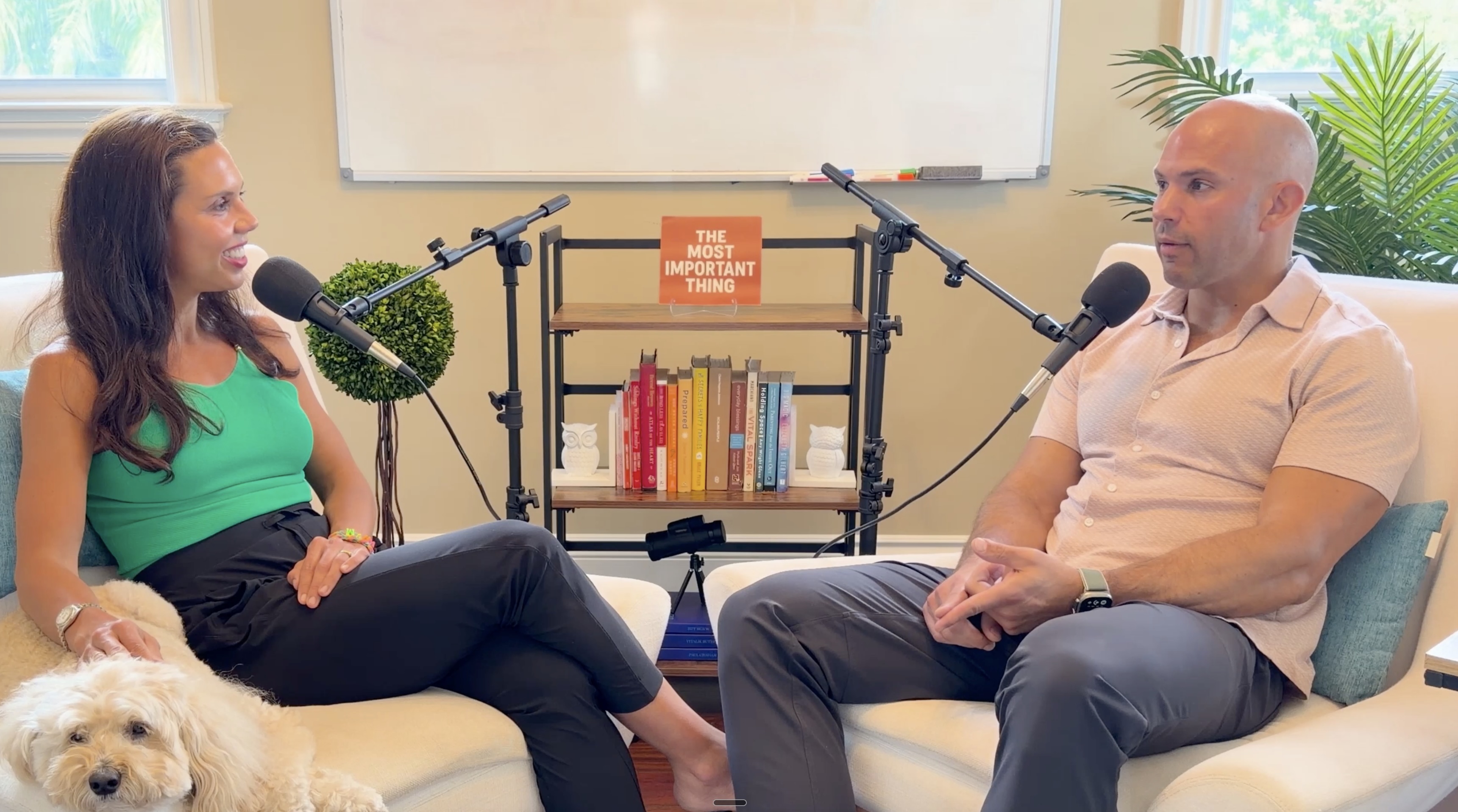


Nine years ago this month, we found out we were pregnant with our first child. We were thrilled, but we had absolutely no idea how much our lives—and our identities—were about to change.
Like a lot of type A couples, we prepared by debating the logistics: breastfeed or bottle feed? Nanny or daycare? We came to the table armed with books, opinions, and what we thought were "non-negotiables".
Looking back, we realize that every single one of those "non-negotiables" was actually just a disguise for fear.
In this episode, we are sharing the advice we wish we could give to our younger selves. We talk about the loneliness of being the "default" parent, why the newborn phase was also isolating for Greg, and how we eventually learned to stop debating surface-level choices and start supporting each other's underlying fears.
If you are expecting a baby, are currently in the thick of the early years, or just want to align better with your partner when making big decisions, this episode is for you.
In this episode, we discuss:
-
The "Non-Negotiable" Trap: Why rigid opinions are usually just a way to protect ourselves from fear.
-
The Research Divide: How one partner obsessively reading the baby books can actually create a lonely dynamic.
-
Identity Shifts: Danielle’s existential crisis of going from a Louboutin-wearing salesperson to a stay-at-home mom.
-
The Dad Experience: Greg’s honest admission about not feeling connected to Hunter for the first nine months, and what changed.
-
How to Stop Debating: The framework we use today to get aligned on family decisions without the resentment.
Join our newsletter: tmit.cc/newsletter
Follow us on Instagram: instagram.com/themostimpthing
0:00 Hi, everybody. Welcome back to The Most Important Thing. I'm Danielle. And I'm Greg, and together we're exploring family, culture and leadership at home. So what are we talking about today? Well, it's March. Can you believe that it's March already? Crazy. Flown by 2026 so far. Yeah, I don't think I've turned on the heat more since we've been here in Florida. Our friends up north have had a much harder winter than we have, but every March I can't help but think about how nine years ago now, we first found out that we were pregnant with Hunter, our first born. Well, our second born if you count Winston, but our first human child. That's right.
0:40 And that's why I'm wearing pink today, to have a little bit of a throwback to the it's a girl well. We didn't find that out in March, but yeah, it was such a exciting time, right? And we had no idea how much our lives were going to change. We just had no I. We didn't even know what we didn't know. Right. Well, nine years, right? We were only together for two at that point and married for less than one. No, we were. Yeah, Yeah, that's right. Yeah. Yes. So it was a it was a serious, it was a serious time of change already where we had gone from not knowing each other, meeting, living separate lives, getting married, living together, getting Winston and then boom, we're pregnant. Yes, we were definitely on the fast track. However, I don't think that there was enough time in the world.
1:36 Like, there's no amount of time that, at least for me, could have prepared me for the changes that came along with motherhood. Yeah, they really caught me off guard. They. Did. Like so much so and so you know, this episode, like what we wanted to talk about today is just that time and reflecting upon it. And we know that many of our listeners don't have small kids yet, right? Some of them are either not married or just getting married, starting the whole baby process. And so this episode is especially for you. While we hope that everybody can get to know us a little better, we wanted to talk about the early days and kind of like how we got here and what we might have done differently and what caught us off guard.
2:27 Yeah, I think to your .1, there's definitely a lot of listeners who were on the fast track but are maybe 5 or 10 years younger than we are and we're hearing. From or our age and just starting to have babies. True. Or our age and just starting to have babies. Very true. And we're hearing from them that they love listening to team it because it makes them feel like they're a part of something bigger. And they're excited for this path and they're excited to be aligning with their partner. And so in the interest of making the implicit explicit, let's talk about aligning with our partners at the at the first stages of family, which is really, hey, we're pregnant now what so. Now what?
3:13 Yeah, now what? So if we think back, knowing what we know now, can't say we can push that on to young Danielle and Greg, but what are some of the things that we're doing today that might have been helpful to younger Danielle and younger Greg back then? Well, I want to say that we did a lot of things right. I don't think anything was like totally wrong, but I do think that we had a lot of conversations at that time about really tangible things like are we going to breastfeed or are we going to bottle feed? Is there going to be a are we going to send the kid to daycare or are we going to have a nanny? How long am I going to take for maternity leave? Like really brass tacks, logistical questions and obviously those need to get answered. But I think that we well, when I think about the way that we talk and have conversations about all of the decisions that need to happen with our family today, you know, private school, public school, you know, extracurriculars, etcetera. We today we really look at it through the lens of our values. And back then, I think that we spent a lot of time coming from a place of instinct and dare I say non negotiables. Non negotiables.
4:36 That's very, that's the way to put it. That is, that is very true. We were opinionated, but this is our first kit. So like questions like breastfeed or bottle feed comes down to things that we read in the science or things that we, you know, hear from friends about the challenges of working and pumping or working and being a breastfeeding mom. And so like we come in and we have discussions about these things and they they show up as non negotiables, right? Yes. Like Greg was very clear from the moment I got pregnant that we will have a baby nurse and that that was really, really important to you. Yes, I think it was important because I had heard from friends in Manhattan about how much about the efficacy really like and it wasn't about a baby nurse versus nobody. What I was hearing was that it was it like in laws coming and staying for weeks at a time.
5:38 And I'm just thinking to myself like, you know, asking a parent of one of us to come and live with us to help with a baby is like asking a retired mechanic to come and, you know, fix my Tesla. Like that is just not going to fly here. So let's have the person. Still so passionate about it. So, so that that was that was my non negotiable. I was like, but you're right, it was a non negotiable and underneath that was what? Fear. Fear. Yeah. But the thing that I know about you now that I didn't know about you then because we were still getting to know each other. We still hopefully we're always getting to know each other Greg. But you know, two years in or whatever it was, was that when you lay down a non negotiable like that, there usually is a desire to protect something else, protect or optimize. And underneath that is a fear.
6:35 And so if I can just encapsulate it, I think that I wish that we had spent less time talking about the non negotiables and more time talking about what those brought up in US and the fears that we were both having. Because I think that would have allowed us to understand each other better and spend more time supporting each other and less time debating which type of daycare the kids going to go to. Of course, I mean, in just in preparing to have this conversation, the thing that showed up to me that really stood out is what fear does to a relationship. It's very bonding.
7:21 It brings us together to understand what that fear really represents and why I hold that or why you hold that. And then we can talk about it together on the same team versus a non negotiable. If I show up like it's probably human nature just to want to like push back against someone's non negotiable. It's definitely my nature to try to explore the other side. And so if I'm like, we have to have a baby nurse, you're like, I never thought about this. But now I'm wondering if Greg had knows what the hell he's talking about. Right. And let me go refer to my books. Yeah. Like, that's another thing that I think, you know, and I've heard many friends talk about, I'm not necessarily alone in this, that I think the way that we both prepared for our first child was very different. Like I'm a reader to say the least. I I don't think this is uncommon either. I've heard from, so let's talk.
8:18 So let's talk about it like I, so you know, I recall like I'm sure that I had a 220 item baby registry and every single thing was research backed by something that I read, right. I'm the one that like couldn't wait to get the e-mail in my inbox about like the baby's the size of a papaya this week, that kind of thing. And I didn't necessarily feel like you were preparing in the same way, which I just want to say at that makes sense. Like I had a human growing inside of me. Yeah. But if can you talk a little bit about, you know, to the extent you remember what that was like for you? Yeah, well, I went and looked back at pictures and videos and stuff around this time. And so one thing that I remember is I took a picture of you every week with the baby body.
9:06 Yeah, you did. Yeah, and same, you know, it's kind of same pose, like type of thing in our apartment, same spot. And like for you, you're feeling that week in week out, like the changes inside your body and you're communicating to me what's going on. However, you're also juggling a bunch of other things. You were in a new job. We were traveling to, you know, a friend's wedding. We were traveling to work over overseas in Europe and and. Like we had just gotten. Winston exactly. Like, there's a lot going on. And I don't even think that we stopped to have the conversations about the preparation because you were really on top of it. Right.
9:47 And So what I remember is feeling very supported, feeling like my wife has got this. Yeah. And I mean you did in a in a way like. Right. And so that's, that's the thing with many of us high performing type A women, right? Is that on the one hand, I did have it like, great. I, I really am proud of a lot of the decisions that we made and a lot of the things that I read, I still recommend today, right? But there's still this feeling, I think, of loneliness or isolation, where even though I'm fully capable of making all these decisions or being the one that's doing all of the reading, it can be a lonely feeling as well.
10:31 I understand how it was lonely, like #1 I understand how it was lonely. But you didn't show up with very much fear. You showed up with curiosity. And so I think that for me, had you shown up with more fear, like had you, had you had we talked about our fears and this is goes back to what we know today that we could have done differently had we talked about our fears, right? We would have gotten to the these Nuggets like, oh, I'm actually scared. And the way that I show up in fear is through absorption of materials, information, trying to get through that fear, but I really don't know what I'm doing. And so like, can can you X, can you help me? Can you just be there for me?
11:16 Can you? Be with. Me. Yeah, not even be there for me. And I think that's a really important distinction though, because like, even though I'm carrying the baby and obviously having a lot of experiential, like, a lot of, you know, I'm experiencing a lot of things, hopefully this is a time where we can, you know, be together in the experience, if that makes sense. Where we can be together in the experience? Yes, with the caveat that I can't be together in that experience unless you bring me in. OK, Yeah. And that goes back to like my fears, my non negotiables, which were about the fear of not being able to work effectively if I didn't have sleep, of you not being able to go back to work if we didn't have help, of us being kind of like almost in a way like not a family because you and I didn't have that time to connect. I think that's shown up with every one of our children and the departure of our nanny, right, Which I applaud you for. I'm so grateful for that you are constantly thinking about our relationship and making sure that we have enough time to connect.
12:42 Yeah. I also wish that we had had more, more frequent, smaller conversations about that kind of stuff because our identity changed so quickly and kept changing. Does that make sense? Like I just look back upon that time for me, when I say motherhood caught me off guard, I really mean it. Like I didn't know that I was. I just thought I was going to go back to work after 6 to 8 weeks and just keep on trucking and be like pump at work. Travel globally. Get the baby out, go back to doing this. Exactly. Was the baby surrounded by men like? Come back home.
13:23 And like, this whole part of me that was like clearly buried because I was the town babysitter, right? And absolutely loved children growing up. Like this whole part of me just like came back up and I was like, I'm obsessed with this person and I want to be with her all the time. And the way that that really came out was that I really felt like I needed to exclusively breastfeed her. No pumps anywhere insight, right? Forget about formula. Like, just like no pumps anywhere insight, right? And even my body, as you reminded me the other day, even my body reacted to that like I couldn't, I could not pump at work, right? And I do think that part of that was for me, psychological. And so I would just say that recognizing how much of A shift, I mean, everybody can chart their own course, but I just didn't, it really caught me off guard how much my identity was going to shift and how the things that I really truly over identified with work.
14:32 I can say that now and with my career and with myself as a world traveling Louboutin wearing salesperson, right? And none of that stuff, I don't want to say none of that stuff mattered because that's not true. That stuff still matters today. Not the Louboutins, but like the, the career and the the, the I like to use my brain towards profitable endeavors, right? That has not changed. What really changed is how important my direction was at work. And so I did shift companies at that time. And I went from a place where I really truly believed in the mission at Citadel to not feeling that way in my new spot. And I think I really believed in the mission, but I didn't necessarily feel like the leadership had a vision for for our future.
15:30 And so I think that always would have bothered me. But becoming a mom really left me with a lot of existential questioning during my maternity leave around like what is this all for and is it worth it? Is it actually worth leaving my child over? Like the bar just became so much higher. Yeah. And while that surprised you, I am reflecting on that time, wondering why I didn't see that coming. Not not that that was a bad thing. Like fully supportive of your journey.
16:11 You were so supportive of me quitting my job. Like I really appreciate I went from a really strong earner to nothing in our family and that was that was a big deal. Yeah, it was. However, when we talked about our formative years, like early in the relationship, the thing that really should have grabbed me harder was what you just said about how much you loved babysitting. Like when I asked you like, what was your formative years like experience that that you where you showed up as your best self and that you reflect upon and you said babysitting.
16:56 You didn't say going to the office with my dad. You didn't say, you know, like, you know, reading this book with these types of books or, you know, fiction or history or whatever, like it was babysitting. And so, yeah, I think that I realized that when you said you wanted to quit your job, and I was. And by watching the interactions of you and Hunter and just how immersed you were, not in like a creepy, like overbearing way, but in just like such a curious way about how capable she was. It was unbelievable to experience that as a father like I was. I was shocked to see you take such control of a situation without being controlling over the environment in a way that felt suffocating.
17:50 Thanks. Yeah. I mean, that's the other thing that really surprised me was 1, was my identity really shifting in motherhood? But two, you know, Hunter was a week late. We had a beautiful birth. And I'm very, I feel very blessed for that. She came out so much more capable than I had ever been prepared for. Like I didn't know what to expect, but I knew from the very beginning that she had. I mean, I think all babies do if we allow them to. And I, and I didn't know how much I was really going to believe in the capability of an individual from birthright. And what I what I mean by capable is really just capable of independent play, capable of not needing much. And so that, you know, that's could be a whole another episode that has really informed a lot of the way that we nurture our children in the early years around. No toys with batteries, lots of open-ended toys, no mobiles, things like that.
18:58 But yeah, I was really shocked at just how whole of a being she was from the very beginning. All of them. But with Hunter, it was the biggest surprise. You were, and you communicated that really well to me because you were with Hunter a lot, as you mentioned. Like when she was awake, she was with you. You were nursing her, You weren't pumping. You went into the office for a few weeks after maternity leave because you were pulled in early, remember, And then you quit and then you were home for a while. And, and I was surprised almost by like how being a dad was a second it, it was like a third person store, like storytelling.
19:54 It was like you were telling me what was going on and how I could support you. And that was great. But this child was sleeping and I wasn't really interacting with her all that much other than, you know, here and there on the weekends when we go for a walk this and that, like. And so I was surprised that I felt like we were a family, but I didn't feel much of A connection to her for the first nine months. And then that all changed, like she became a sentient creature and it was amazing and I was so happy for that, but I didn't know when that was going to hit. Yeah, I remember vividly going to a wedding when Hunter was about nine months old in Palm Springs and you coming home after a couple drinks at the end of the night and crying and telling me how you were starting to feel a connection with Hunter. And that it had been, in my words, a lonely nine months because I, And this is on me.
20:58 Like, I was so focused on making sure that she attached to me that I didn't really leave that much room for you. And part of me wants to say I'm sorry. And the other part of me wants to say like, that's truly what my Mama bear instincts told me to do. And I'm so grateful because I did, you know, I don't think it was like egregious, but I would say when when I did offer you a time to bathe Hunter or take her for a walk or something, right? I didn't necessarily feel that you were as connected to her.
21:39 And I recognize now, and I think even then that that's my fault, that I can't really have my cake cake and eat it too, right. But with Jade and with Maverick, I can very clearly remember you, like noticing that you were much more, especially with Jade, like we, she had a clip. What was it like a blocked tear duct. Do you remember? And so like the first gosh, 10 months of her life, probably we had, we had to like constantly wipe away gunk from her eyes. And I just remember you connecting with her when you would do that in the morning or like I would feed her and you would change her diaper. And it was like a very different bonding time when Jade was an infant. And part of that was probably COVID because you were forced to be home with us. But I also think and recall you saying at the time that you you saw the path and you knew what it what Hunter was like at 2. And so you're like, OK, like I can get down with this little 3 month old.
22:36 That's a really good because I know what she's going to end up as when she's 2. That's a good way of putting it. I did see the path. Yeah, yeah. And I guess I'm, I'm trying to think about what the what the take away is here for, for couples. Because honestly, I think it's about checking in. You know, like the fears that I had before the baby was born are very different from the fears that I had at one month and three months and 10 months and whatever. And I'm sure the same for you. Yes, definitely. And I think that recognizing one that this idea that I hate to even use this term because we never brought it out, but I do hear people say it as like a throw away having different parenting styles is actually. We just have different parenting styles, right? Yeah, you'll be some and and it's like it's like a throw away because it's just it's an excuse and it doesn't feel it feels like.
23:38 Agree to disagree. Yes, it's a missed opportunity to get aligned right, to unpack what's in there, and to have a difficult conversation or series of conversations to get aligned. And so I think that what what we're reflecting on here is that if we move from non negotiables to what are we optimizing for to then what is the fear underneath that? That's the way that we get on the same page and and you can't have two people who recognize that there's a fear there on different sides. Like you will be a team if you talk about the fears. Absolutely. Yeah. I mean, it's so much.
24:19 It's hard not to have compassion for you when you talk about the fears, right? And I want to support you and I want to be on your team. So. OK, so we talked about a couple of things. Naming fears. Oh, excuse me, Winston, naming our fears as an opportunity to really align and learn how to support each other rather than debating more of these like surface level choices 'cause there are so many as parents, right? And then having small, short, frequent conversations about how things are changing and how our identities are changing and how our marriage is changing and the fears that we're having. And also like how you are changing and how I am changing. Because it's not just the baby that's developing, right? Like even today, we are now parents of an 8 year old, which is so different.
25:16 And I had no idea that it was going to be so different, right? So it's important to, if we want to stay in lockstep, as they said on the night agent last night, then it doesn't have to be some big dramatic conversation, but check insurance frequently around what's changing. I think can be very helpful. More frequent, less emotionally charged conversations about fears, right? Short ones, short ones, short ones anytime a non negotiable comes up. Anytime it's an. Opportunity to get curious. It it really is. Right. And because the sooner that we can understand one another truly where we're coming from, not with the very discreet, tangible things, but the the deep, what am I trying to protect? What are my fears?
26:11 The sooner we can focus on supporting one another, absolutely. And just spend less time debating. Yeah. And not being resentful. Yes. Right. So if you're at home and you're saying, hey husband, why aren't you reading these baby books? You got to name that fear. What are you afraid of? Can't just resent them for not reading the book. You got to name what you're afraid of. Stop mansplaining. I will done mansplaining. Anyway, so we hope that you we've given you something to think about and shared a bit about ourselves. We certainly do not have all the answers, but we just wanted to share a bit about our reflections because some of the things that we've come up with along the way are worth talking about. Indeed they are, and thanks for letting us share with you. So until next time, just remember that your family is the most important team that you will ever build and we're excited to be building alongside of you. We sure are.
27:18 Love you, goosey. Love you, goosey.