TMIT 25: Culture Eats Parenting for Breakfast
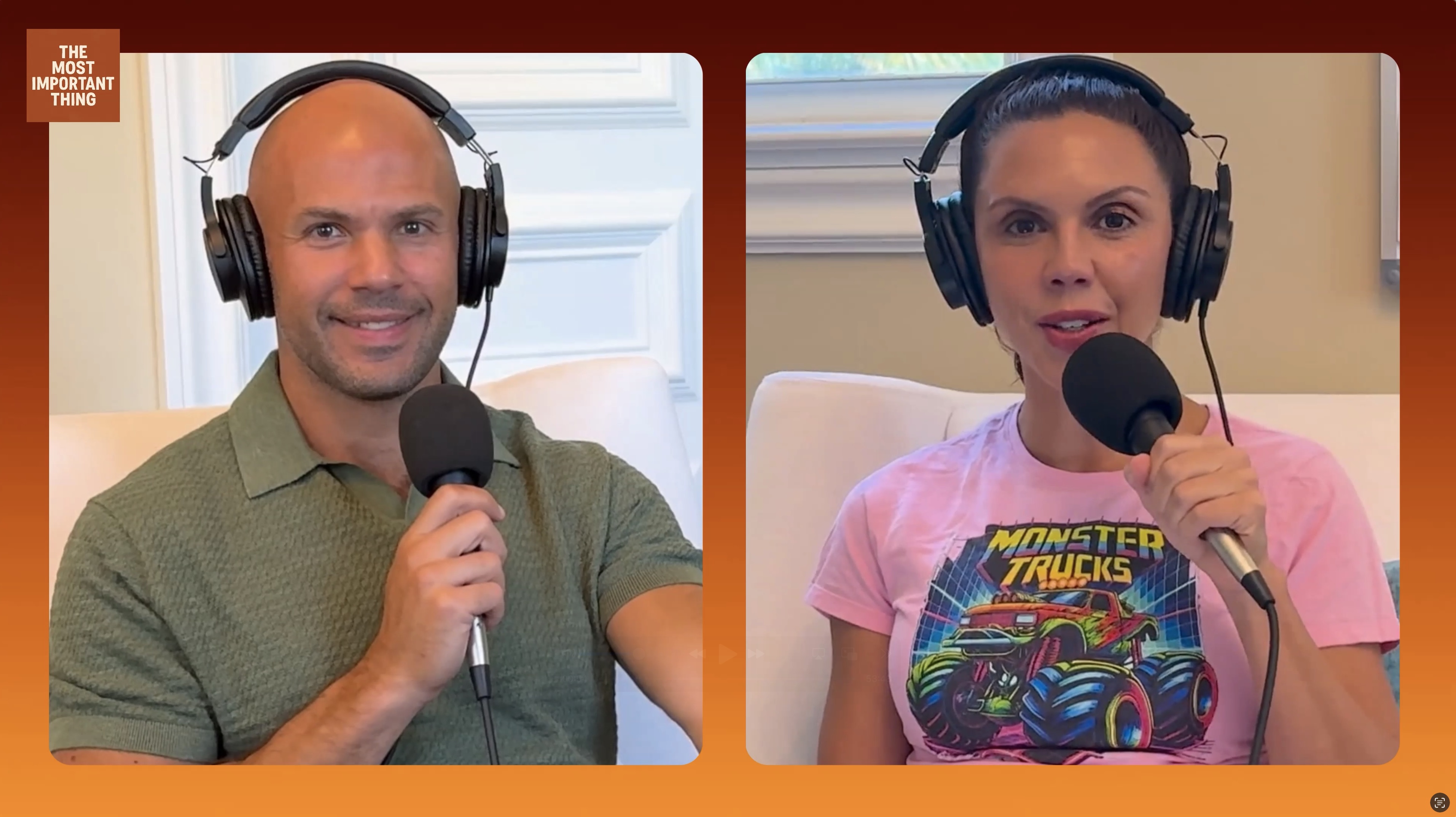


TMIT 25 🎙: This week we’re talking about the difference between parenting and building family culture, using a framework from Scaling People by Claire Hughes Johnson. Parenting is a lot like management—it creates stability through routines and logistics. But building family culture is leadership. It’s about shaping values, vision, and identity.
We share how this shift in language helped us better understand what we’re doing at home—and why it matters now more than ever.
In this episode:
- Parenting = management: routines, schedules, discipline, logistics
- Culture = leadership: vision, values, identity, belonging
- Where this idea comes from: leadership drives change, management creates stability
- What it looks like at home: family meetings, shared rituals, catchphrases
- Why now: we’re not in survival mode—we’re ready to build
- What it’s really about: not achievement, not optimization—just enjoying life together and giving our kids something solid to stand on
We’d love to hear how you’re thinking about culture at home. If you’re trying something—rituals, values, systems, whatever—send it our way. We’ll try it and share what we learn.
0:00 The reason that we're talking a lot about leadership and management is we're we're finally clear, I think in our vocabulary. Only 25 episodes in, but you know better late than. Never. That's right. Well. We're just getting started. We we needed the right analogy and I think we have it here. And it comes from Claire Hughes Johnson in her book Scaling People, where she says leadership is about driving change while management is about creating stability. And so to us, parenting is a lot like management creating stability through routines, whereas culture is building the leadership into the family. This is where we are putting our foot forward and talking about how we're going to define who we are and what we do, even when no one is watching. Welcome to The Most Important Thing. I'm Danielle DeMarco Neufeld.
0:55 And I'm Greg Neufeld. Together, we're exploring how ambitious busy families can build culture at home. Because after all, family is the most important thing. Hi, everybody. Hi, Craig. Hello. Hello. How you doing? We meet again. That's right, Happy Monday. Yeah, I'm doing OK. It's the last week of August and our kids are back in school. It's crazy. Yeah, I know, right? Time's flying. It's yeah. So the first week went pretty well. Yeah, Maverick is homesick today because of all those preschool kid germs. But that's OK. I think we're both fighting the good fight against the germs. Need a calendar reminder to build in a sick buffer for us and for the family. As soon as everyone go, it comes back from a break. I wanted just to circle back on our Dopamine Mote episode from last week and mention how we are reducing audio book usage after reflecting upon it further.
1:52 So the girls were listening to their audio books every day for 30 to 40 minutes, plus an hour or so on the weekends, and it just stopped serving us. We realized during the first week of school they were kind of obsessive about it, right? Yeah, ever since we came back from that trip. I mean, part of it I think is really enthralling books for them. You know, they they love this series. What's it called? Upside down magic, but that's hunter Jade just listens to I mean listen, I think it's great content. They they love upside down magic and the whatever after series. Sarah Malinowski. Thank you. She's one of three authors in the other one.
2:33 But it's just, it goes to show me that almost anything can be used to hijack dopamine, right? Even something as plain vanilla, like inoffensive in today's world as an audio book. It's not so much about the outside thing and it's about how they're behaving around it, right? And so the second that they got home, they wanted to turn on their audio books. And when it wasn't working one day, Hunter had like a complete meltdown, right? And I realized that in this back to school time, we need to hold space for their emotions, not the audio book that just kind of stifles it or suppresses it or, or puts it on pause.
3:15 So we're trying something new, which is, you know, no audio book after school. And we'll see how that goes. We did it for a couple of days last week. We built a little menu, as we do on school to home transition options. So today they're going to the library after school instead of coming straight home. But the point is, I'm grateful for that episode because I think that even though the kids don't regularly watch screens, there's still a lot of other ways to hijack dopamine, and it's more about watching for the way that a person responds to it, and ourselves included, as opposed to the thing itself. Yeah, anything that's hijacking your dopamine lately.
3:56 I think social media has been a really interesting thing for us both since starting. The most important thing because previously I didn't even use Instagram except to peep on housewives sometimes and barely used Facebook, right? And so now we're finding ourselves in the social media mix more than ever. And I'm trying to use it as a way to learn things and kind of study the behavior of others. I mean that sounds creepy like. Learn from, learn, learn best practices. Yeah, learn best practices. What looks beautiful? What do I like? What do I actually find informative from folks that I hope will become our peers one day when it comes to, you know, having a message like the most important thing out there, but I end up failing a lot. I just want to say that like, I'm like, oh, I'm on here because I'm going to look at how this really, you know, big influencer is doing these beautiful posts. And then before I know it, I'm like in a very deep rabbit hole of things that I don't even, I couldn't even tell you what they are.
5:03 I don't know. And then I have to pull myself out. So it's a it's a daily. It's a daily fight. There's a reason why I didn't use social media prior to this, but I'm learning to, as with many things, not be so black and white about it and kind of live in that Gray anyway. OK, so I do want to talk about something that we both saw over the weekend that I think is worth talking about. OK, so Gallup recently released their annual consumption habits survey where they took a look at Americans over the course of the month of July, and they found that 54% of US adults now report that they drink alcohol, which is the lowest rate in nearly 90 years.
5:45 Wow. It's interesting for a a couple of reasons. One, I think it operates. It's my recollection. My recollection is that the band is like the high is like 1978, seventy, 1% or something like that. And then this is the lowest it's ever recorded. But that's 57%. So we're still talking 54%. So we're still talking, you know, a relatively tight band of alcohol drinkers, but it's on the decline and it looks like it's going lower. That's right. It was a 13 percentage point drop from 2022 levels. So 67% of adults drank alcohol in 2022 versus 54% today. Do you have the drivers there 'cause I? I like it.
6:30 Looks like the sharpest declines have been among young adults, women and Republicans. Right. Yeah, that's what I saw. Republicans. Yeah. So it says that Democrats drinking stayed relatively steady, but that women's drinking is down 11 points in one year. It's now at 51% versus 62% for males. But probably the craziest stat, I think, is that only 50% of those aged 18 to 34 drink alcohol, versus 72% in 2004. That's a huge drop. Huge A. Little bit sad from from my perspective, Not that I think that unhealthy drinking is worth celebrating.
7:12 I I don't think either of us have had a drink in over a year now, right? I had one in February but it was a terrible experience. Right. And before that, I mean, we've probably had a dozen drinks in the past three years. Yeah, right. Right. The the impetus for me is is obviously health, but it's not like long term health as much as it is just feeling my best with young kids. But when I had plenty of time to not feel so good, I think it was pretty important, especially early in my career. Like I used to host hundreds of people for our work events at the standard beer garden. You know, everyone, every single person having a mug of beer at least during that time, usually 3 or 4 and everybody leaving with new contacts, new friendships, new relationships, etcetera.
8:05 And I think that New York is still, I would, I would say based on what we saw see in the data, probably index is higher in terms of young people drinking. But I think it's a big miss if if this isn't substituted with something else that's equally like unhealthy and socially lubricating. Yeah, I agree. I mean, on the one hand, I know that I guess more strongly than ever before, that alcohol is poison for your brain. And on the other hand, I'm so glad that I did not get that message in my 20s because it was so much fun. So much fun. And I don't think we would have met if it hadn't been for alcohol. I mean, the friends that I met you through were my drinking friends. Why else would I be out at that late on? A But even that, like, I wouldn't know those people, and you probably wouldn't know those people if we didn't have a shared love of going out and drinking. You know.
8:58 Wednesday nights, whatever night like, so such a great social lubricant. And yeah, I don't know that it is being supplanted by anything else right now. It feels like we'd have to look up this further. But like, it really does feel like this is more of the isolation, the loneliness, the depression and the anxiety that we're seeing that not drinking is in some ways I feel like drinking was healthy, was healthy for me. It was it was adaptive. It was socially important to my to my experience. Yeah, and in a way, at least for me to enjoying what I do for work, because a lot of my drinking in New York was around work.
9:47 It was like, like I was was taught this, you know, this Pavlovian thing, which is like work equals fun because I get to go out after 5:00 and have drinks with people in my industry, talk to them, like meet more people and follow up with them during the daytime the next day. I see. You know, like in a microcosm, like the way that you and I met was through work. Yeah, we're definitely like, whatever that means that like, you are sexually attracted to someone because of, like, their brain. Like, there's definitely one of those things going on for us. But also, yeah, I mean, for me, I think it was also like building this 3 dimensional person. You know, if I just saw someone in a meeting during the day across the table, it was not nearly as connecting right as going out with them socially.
10:38 And I if we were both sober, I don't think that the conversations would have been the same. No, it's it's a bummer I saw this tweet. It was a VC who said I had a poker night at our office. You know, beer and wine were served. Not a single beer was open. I understand that drinking is unhealthy, but man, am I glad that I did in my 20s and 30s. And like, yeah, Amen. That really resonates with me for sure. So what does that mean? I mean, I guess do we encourage our children to drink? We're a little bit early on, but I think that this idea that alcohol is poison, while while true and that there's no amount of safe alcohol out there, I it is one of those kind of cost benefit analysis things to think about further.
11:25 I personally am grateful that I moderately drank really until COVID. Me too. And I don't think that my drinking days are over. I just think that right now it doesn't really serve me. And by the time our kids are in college, I'll probably want to be drinking with them. Even if they're, you know, saying, hey, I'm going to have one with you and then go meet my friends. Like, I'll take it. Oh, that's fun. I like that. Yeah, OK. I see some posts from family that are whose kids are recently in college and they're all cheers in one another, like on family vacation or whatever. Like that seems like a great connection point that you kind of only get to have once in your life.
12:05 You know, I'm, I'm not going to shun alcohol and say that it's complete lethal poison because here I am standing and I just think that it's a lot of people end up having problems with it if they're not happy with who they are. Sure. Yeah. So it'll be interesting to continue to follow this and see how it plays out over time because maybe it's just the pendulum swinging towards the other way and it will end up kind of optimizing in this in the center, right. Maybe this is the low, but I I wonder if we'll see fewer frequent drinkers. Like one of the things that it says is that the average number of drinks per week is down to 2.8, which is the lowest since 96.
12:46 So, and only 24% had a drink in the past 24 hours, which is the lowest figure that Gallup has ever recorded. So I'm very supportive of that. Like that feels like the right thing that it should be. I mean, everybody has to make their own decisions, obviously. But for society at large, I would think that infrequent drinking. I mean, when you think about historically how often our ancestors drink, it doesn't seem like it was every day. It was for for most people, right? It was more like celebratory around a solstice or an equinox, something like that, like a big, a big feast or festival and that there would be there would be wine during that time, but it wouldn't be something that was, you know, people weren't imbibing 5 * a week. Right.
13:32 Totally. Yeah. Obviously like the more available it is to all of us, like the, the more the pendulum's going to swing in One Direction and then probably in the other. I would imagine that GLP one drugs are also part of this decline and I'm sure they're not measuring that. Great point. Yeah, I, I 'cause you can't really drink on them. I think that yes, and I think it changes kind of your brain in terms of what's important. Oh, interesting you. Notice that like a lot of those, like a lot of the housewives that we're on GLP one drugs like stop drinking all the all at the same time.
14:14 Yeah, I think that's, and we know a couple people that are on them and they're not drinking right now. So yeah, yeah, it's very possible. OK. Anyway, well, we just wanted to mention this because I think it's something that is culturally relevant. Whether there's drinking going on in your family or no drinking, that's part of your family culture. Interesting. Yeah, I think it's fair to say that like a couple generations ago in my family, like drinking was the culture. And so I'm really grateful that I think I've told you before, like your family did like activities and they had hobbies and things. Mine drank and talked. Like that was primarily the thing that they did. So I'm grateful that we are developing other things to do, but I still believe that there is a place for alcohol from like a celebratory standpoint or a social lubricant standpoint.
15:04 And it's a great way to to make friends and to really build connection in moderation. Yeah, well, you know, even like we tried out some things early in the game, like a weekend babysitter so that we could go out. Oh yeah. And that was pretty short lived, but I know a lot of people that do that and that means that drinking is a fairly big part of their lives if that's, you know, perhaps. So it's just a notice that I didn't think about drinking as a part of family culture until we're here having this conversation. Sure. Yeah, Without getting into specifics, I would say that what we're trying to create here is kind of a love for every day. Yeah.
15:48 Like we are so fortunate to get to do 2 things now that we love doing and that really do feed our soul Monday through Friday. So we are not kind of like A Tale of Two Cities, my dad used to call it like weekend warrior kind of people, right where we would like really we're not grinding. Maybe we were in our 20s a bit more, but like right now we are not grinding during the week. We are working thoughtfully and I think very effectively, but we're also making time for rest and healthy eating and working out. And so when we get to the weekend, it's not like we're overly exhausted because we've been sleeping 5-6 hours a night, right? And so I do think that there's this messaging and maybe just reality that hopefully some, you know, things are changing, but that if you're working 14-15 hours a day, not getting enough sleep, not spending quality time with your family, even though you want to on the weekend, you're letting off steam, right? And so we've definitely seen that change for us kind of more of like an, an optimal, an optimal push seven days a week, I guess, if you will.
17:01 And so that really gives us the opening, which I recognize that not everyone has that this is a very, it's a very privileged space to be in, right? And so we have the luxury of not having to let off steam on the weekend to have more capacity to be present. For sure, it's I'm glad we're on the same page about that. I think we've, we've come to a good place for right now where we are with the kids, with, you know, how old they are and how we're showing up for them because you know, that's this is, this is really the time and we'll get into in a minute why this is the time.
17:42 Yeah. And so for now, alcohol doesn't really serve that time. Exactly. Yeah, totally. Cool. All right. So today I want to talk, we want to talk about culture versus parenting. And the way that this came up is there was a, there was a thought that I had, which was like, family culture is not parenting. And we've seen a lot of parenting content and I didn't really know how to address this. So I started just writing like A blog post on what family culture is. And it didn't seem to like sit well as an, as a post without an episode first. And so Danielle was like, let's turn this into an episode. And So what I want to do is start out by just reading the first two paragraphs of what I wrote, and then we can get into kind of the meat of the argument, if you will. Sure.
18:45 That sounds good. Yeah. I mean, for me, I think that a lot of this is about defining what the most important thing is and what we're doing here. A lot of the initial feedback that we've gotten, while positive, has also been kind of it's a parenting podcast and that doesn't feel great for to us. Not that we don't love parenting books and parenting advice, me especially, but that there it's something different. And I think really trying to get clear about why we believe in a world full of Doctor Becky's and Big little feelings that there's still a space out there for the most important thing that is truly differentiated and unclaimed.
19:26 This is our attempt to explain the corner of the universe that where we are staking the ground and going on this journey. Yeah. And I think if we're doing our jobs right, this is a whole category. It's not just us. Because what I know about my studies at in undergrad studying business and organizational behavior is that like the organizational behavior of one organization to another organization never looks the same. But what does look the same across every organization is how the intentional they are about them. When you come to greatness and the same thing goes to poor organizational behavior.
20:06 So in any business that is failing, you will see a lot of the same mistakes, a lot of unintentional behavior, right? And so I, I started writing with this framework in mind and it goes. There's that old line culture eats strategy for breakfast. I've watched it play out in our portfolio companies at Value Stream. The idea is simple. It doesn't matter how brilliant your plan is, if the underlying culture, you know, the shared values, the beliefs, the way people act isn't right, that brilliant plan is going to fail. And that's the big thing we're exploring here. What if the same thing is true for families? What if all those parenting strategies we obsess over the sleep training, the discipline tactics, all of it. What if they're all just secondary to the culture we're building, whether we mean to or not inside our homes. So before we unpack this further, I wanted to talk a little bit about how we got here, right. So I think we got here pretty similar to how most families get here.
21:16 We say we're married, let's have kids, right? Let's have kids is an interesting conversation because it's a time based one. It's usually built around time. In our case, we were maybe 3031 and 30, about to be 33. I think that I think right. Yeah, I think I was still 30, but yeah, yeah. And you came to me and you're like, OK, I think it's time to start trying. I said, Greg, I don't want to be on birth control anymore and let's just see what happens. That's right. That's what I said. Yeah, and we had just gotten Winston our. I said that and then when I went off the birth control, I had a lot of hormones and I was like, I am going to freak out about getting pregnant if I don't have something else to love. I need to get a dog.
22:07 I had like stayed home from work for like a mental health day because my hormones were woo. And I was like, Greg, I think I sent you, you were at work and I like sent you a picture of Winston. And I was like, we're going to go get this dog on Saturday. Let's find out if our landlord will let us have dogs. So I could always count on you to remember exactly how it went. So thank you because that is exactly how it went. And I remember standing in the kitchen being like, no, I have more time. Like I have at least nine months before we need to be thinking about this and more like one to two years based on what you had told me. Now not having a child before, I forgot that there were ten months for the gestation period and that it doesn't happen immediately.
22:52 So I was not doing my math right. And so I was like, scratching my head trying to understand where I went wrong. And on top of that, I'm envisioning my New York social life like blowing up. I'm just like, OK, what is going to happen with, you know, my sleep first and foremost, That's the most important thing to me. I'm not going to sleep. Yeah, but in a different way. I mean, because we were drinking alcohol a lot and going out a lot then. So just to go back to the alcohol study, like when you say sleep, it was like sleeping in on the weekends. More of a work hard, play hard kind of. Exactly.
23:32 Thing, yeah. And so I'm like, OK, what's going to happen to my social life and my sleep? And then, you know, wait, are we going to be sending our kids to New York City private schools like. Where are we going to? And I shudder. Are we gonna move to the suburbs? Like, there's a lot of stuff going through my mind here, right? Because this is what this is the information that we're fed that we are screwed when we have kids. Like where? I don't know where that came from, but especially dads get fed this, this advice, like your life changes, your situation changes, and your relationship with your spouse changes.
24:16 Like, shoot me. It sounds horrible. And and then Fast forward, we have our first child. Like it's not nearly as bad as I build it up to be in my mind. We don't have all the tools, but it's just one kid. Like no one tells you that either. Like it's just one kid, just one kid. When they're not even moving, it's like, oh, OK, it's not, it's not all that bad, right? But just to get to the like, the point of how we got here, then we had another one and everything broke. Yes. Right I. Mean well with one kid we could travel we could still go out and have the weekend babysitter I think that we did some things right for us with Hunter as far as like rye resources for infant educares terrible name great approach for us for the infant toddler stages yeah we had we had child care so we were still working the same hours and it was pretty easy and adaptable to like continue going to weddings in Palm Springs in Italy like things like that were all work fine with hunter in my belly or in tow.
25:28 But when we had a second, I can speak for myself, being an only child, my brain broke. Like I had such a hard time with our second. Not only did we have a challenging birth and some trauma associated with that, but this idea of like dual focus and having to have my attention split between two of them at the same time and like always feeling like I was leaving someone else out was devastating for me. And all of a sudden, there were as many babies in the house as there were adults. And it just kind of tipped the scales so that we no longer were wanting to do or felt like we were capable of doing the same things. Totally.
26:16 And we weren't. I think the thing that broke us is that we weren't doing it together anymore and we both realized that like 4 weeks in and So what did we do? We. Went to the Mexican restaurant across the street. We brought our laptop. I'll never forget it with Jade and the bassinet and I guess we had a babysitter for Hunter and we just sat there for hours. For hours, definitely crying, definitely drinking. I think so. And I mean crying for me, for sure, and laughing and trying to figure out new systems and routines that were going to support us during the challenge this challenging time. But also I think how to get back to to us. Yep, absolutely.
27:03 And so I think that moment we started, we planted the seed around first principles approach to raising children in Manhattan and more broadly raising children where we just were questioning everything. Like I think that you're the the wry work that you stumbled upon. Let us down a bunch of different rabbit holes and somehow like Fast forward, I remember we're with a couple of our friends visiting, visiting them in New Jersey and we're in your parents house.
27:44 I think your parents were away and we're talking about school and we were definitely drinking. And you were like, what would you think if we didn't send our kids to school? And I was like, what? I think my brain broke. I know just like I did when I was like, I'm not going to use my birth control anymore. Yeah, exactly. But little did I know, you had been doing some digging into lots of different communities and pockets. And I think that this is where the idea of like culture versus parenting first came about, which is like, we have choices. What are those choices? Starting to question things, right? Which I think that I hate, you know, it's an overdone phrase, but like a first principles approach to our family really started to take hold, right?
28:37 I mean, if I may say, I think that naturally I'm a pretty great manager. I really like routines and like day-to-day check insurance. And if there's a problem, I love to solve it in a way that aligns with my values. But there were these moments throughout motherhood, right? And throughout really, I think it even started as early as like you and I getting engaged and it's like, here's the path. This is what you should do. Like you need to have a honeymoon in the Maldives. You need to get married in a very large ballroom in New Jersey with sparkly diamonds on the very tops of the giant flower bouquets. Like these were the things and much to some of my close people in my life's chagrin, like we didn't do it that way.
29:24 And so I think that I'm always, I've always been sensitive to when there is a large kind of influx of noise of of kind of the traditional path. It gives me pause. And even though I want to keep managing I am for I am forced to really sit back and start to think about from a first principles approach like how do I want to lead here? Yep. And I think that what we learned in that Mexican restaurant was that the goal was not survival. The goal was having systems to thrive and developing those systems thoughtfully and intentionally.
30:06 First it was just like, what are we each going to do separately? What are we going to do together? But then it was more like, how are we all as a family going to handle this and where is everyone going to show up? Where is everyone going to exist during the day? I still think there's a lot of management though. Sure, totally. But I think weaving in the culture didn't start with family culture. It started with Citadel, right? It started with value stream. So when you were at Citadel, you want to just like rehash what you learned about culture during the hard charging times of the financial. Crisis, but like I don't know if it started with Citadel. I definitely think that the need for a culture as a foundation to support me during difficult times made it clear to me that I wanted to have that as a family.
31:09 I mean, when Hunter was nine months old, before we even had Jade, we set our family values and they're not perfect, but they still live to this day. As far as like wanting to be intentional, we I think that and I think this is probably a relatively common family story is that prior to four months ago we were intentional in fits and starts where we kind of had the management thing down, the parenting, we knew where to go. The kids schools are great when we have problems in helping us develop solutions to those things. There are plenty of resources out there around playing defense I would say. And like if I want to potty train, how am I going to potty train?
31:50 Like what are my choices? And I think that over the past, this year really in particular and since we've started the most important thing, we've really given ourselves space to question how we want to lead our family and continue asking more questions from a first principles approach. So not what potty training method do you want to use? Which one fits with our values? But do we even need to potty train? Right, I like that a lot. What I noticed when you started working with us at Value Stream is that you had gone through this experience, though, after seeing this like hard charging, Tiki, working together as a team culture at Citadel and then your next job that did not necessarily have that. The first thing that you wanted to make sure that we had the value stream were vision mission values down. And so like there's something that has been planted in in your North Star that if an organization doesn't have those vision mission values, there's not really a whole lot to do until you get those right.
32:56 Yes, and they can evolve over time. But when I left Citadel, I went to another hedge fund and they were successful by most measures, but when they fell on hard times and things started to not go so well, there was no there was no core. And when I pressed the founder on what, what is your vision? What, what do you really want to do? Like we are all kind of, it's almost like there's a shipwreck and like we're trying, we're trying to figure out like, where's the lifeboat, you know, and like, what are the things that stay true no matter what fund we open or close? Like what, what are the things that really matter? And he could not answer that.
33:37 And I quit because I, I needed a leader in that time. Always. I need a leader. Like the juxtaposition between my job at Citadel and when things went bad, how we really had a central core to, to keep us afloat and to not only that, but to motivate us to keep going. We had purpose, right? We had, we had built purpose so that when things started to go awry, we still had that core versus the the fund that I worked at afterwards that everything was fine and we were kind of muddling along when things were going well. But when we started to have poor performance and to really take a hard look at what was under the hood, there was no purpose.
34:22 And for me, that was just time to get out. And I noticed that in in that situation with you and it was because I had noticed it with so many of our investments before where the culture is the thing that keeps the company afloat during hard times. And you can't build the culture during hard times. You have to build it from the get go because, as Charlie Munger says, the failure rate of changing a company's culture is sure to be near 100%. So. Interesting. I guess I would question whether it is has to be at the get go or it would be best served to be done during like peacetime, as they call it. Like as opposed to, you know, we talk about peacetime CEOs versus wartime.
35:05 I think when things are going well is the time to build culture. And then I think it for the most important thing. We are finally at this time where the children are old enough and there's not any type of like crisis looming or that we're currently experiencing that we can set down these roots as a foundation. So like this is not the podcast for folks that are dealing with a death in the family, right? This is not the time for that. This is the this is the thing to take advantage of when things are peaceful. Yeah, the, the way that I, I think about this is we're not building a podcast coming from a place of expertise. We're building it from a place of extreme curiosity where we are probably the most curious people about family culture that I've ever met.
35:56 And so we're here to be a sounding board for all these ideas that we're going to throw at ourselves, and we're going to come back and share what's working and what's not. It goes back to that Paul Graham quote from How to do Great work, work hard on problems primarily driven by curiosity, but notice things that are missing where you're on the frontier. And so I think that that's what we're noticing is just that as our children move, as we move from the time where great stability is needed, where great managers are needed to a space where vision and purpose become more important. There's nothing really out there.
36:38 And there's stuff out there in business, but there's not really anything that brings that home to the personal family life. And so we're trying to figure it out and, and we are doing that in public and hoping that a lot of people will join us because I think parenting is great. Everybody needs managers. We need to understand how to manage a home, but there's so much parenting content out there and So what I'm seeking is really just more balance. Completely agreed. So maybe we should define for everyone out there family culture and what it what it consists of. OK. Do you want to you want to take that? So the point is, it's really about building purpose and vision, right?
37:23 And so as we know from our recent reading in the book The Culture Code about how to how to build culture for high performing teams, it comes down to building trust, embracing vulnerability and establishing a shared purpose. And so that's primarily what we mean around leadership within family culture. But then if you think about it from an anthropological perspective, the things that if you can compare parenting, that's a very kind of responsive problems focused solutions oriented kind of linear thinking type model. What we're talking about here as far as building family culture is much more proactive systems thinking, maybe even design thinking in the how the family should really feel and what should be remembered for the future, both what are we building in the present moment and how will what is the feel of our family that will be remembered by all parties 25 years from now, Right.
38:28 And so from an anthropological perspective that touches upon things like values and beliefs, norms and behaviors. So like the unspoken rules of how we act, stories and rituals, the things that we do and the things that we say repeatedly. Social structure. So we've talked a lot about family as a team, which is something that we are trying to do here. Family is a democracy, but it could be any social structure. So the roles and responsibilities that each person has in the family, how the mother and father interact with one another, and then finally, the physical artifacts. So this is a place that I have been saying to you, Greg, recently that I'd like to have more of. Like one of the things that came up in the culture code is just visual representation, whether it's jerseys and helmets or trophies or works of art, things that show us physically what the family values.
39:25 Yes, absolutely. So the reason that we're talking a lot about leadership and management is we're we're finally clear, I think in our vocabulary. Only 25 episodes in, but you know better late than. Ever. That's right. Well. We're just getting started. We. We needed the right analogy and I think we have it here and it comes from Claire Hughes Johnson in her book Scaling People, where she says leadership is about driving change while management is about creating stability. And so to us, parenting is a lot like management, creating stability through routines whereas. Culture is building the leadership into the family. This is where we are putting our foot forward and talking about how we're going to define who we are and what we do, even when no one is watching.
40:16 Yep. And I think that that is an area that not many have explored. I want to mention though the end of the culture code. They when they talked about building purpose, they talked about two different types of leadership. One is the lighthouse method or the lighthouse approach of leadership where you recognize and define that you are at point A and you are trying to get your team to point B. The other is leadership around innovation and creativity where we recognize that we are at point A, but we are trying to get to some unknown point B that may never actually be known, but certainly is not known to the group beforehand. And so I think building family culture is really a blend of both of those.
41:01 Like they mentioned that Danny Meyer who is a famous restaurant tour, 11 Madison Park, Shake Shack, etcetera. He is filled with different catchphrases that are all really focused on helping the waitstaff operate as a team and what to do when you mess up because there are a lot of mistakes that happen in the restaurant business. I mean, probably certainly in the family as well, but that he is constantly defining that point B as far as what does good look like, what does excellent, what is the standard here? And so to me, some of the things that we have done like the Neufeld family cheer or some of our catch phrases there is this.
41:41 We are defining point B for you, right? We know that you can do hard things and that you have to take the leap before you can build confidence. Confidence doesn't come before the leap. Like these are the things that we talk to our children about where we're we are that lighthouse. But then there's also this aspect of leadership at places like Idea or Pixar, where you're building for creativity and innovation. You're just journeying along with the other members of your team and trying to help them surface. Unknown point B And that's actually the aspect of family culture that's most exciting to me is that I have a pretty good idea of what our family would look like if it was just you and me running the show.
42:28 But we have 5 celestial beings in this family that have so much to offer this world. And so I am so excited about really, for me, figuring out how to be more of that creative, innovative leader and creating the space for all of us to really journey together to that unknown point. B. It's beautiful. Yeah. I I can see the Pixar analogy holds a lot better than the restaurant analogy because we don't have people shuffling in and out of this family like we need to build a place where everyone can be a leader.
43:11 Yeah. And I'm despite many, sometimes even me, that believe to the contrary, I'm not trying to build a high performing household. I think it's much more interesting to generate a culture here where we have no idea what's going to come up, you know? OK. So that's a really good segue into why we're doing this. And I think a lot of people would, if they had to guess, they would say it's because we want our kids to be business leaders or start, you know, a, a big company or cure cancer or, you know, honestly, it has nothing to do with any of that.
43:55 It has to do with back to what I said when I had an oh shit moment in 2017 when Danielle was saying, I I don't want to be on birth control anymore. This goes back to I love my life and I just want to have a great life and I want for our family to enjoy one another and enjoy the time that we are spending together. While we're striving towards our potential. It doesn't matter what that potential actually looks like in the end, 'cause we're not doing this for any future state, we're doing this for today. Yeah, I mean, one of my favorite quotes about this comes from Doctor Robert Sapolsky on dopamine. But to me, this is life, so maybe it's all dopamine.
44:35 But he says that dopamine is not about the pursuit of pleasure. It's about the pleasure of pursuit, and that's what I think about when I think about our family culture and what we're doing here. It is the pleasure of pursuit. Yeah, it really is. Yeah. And if I thought that, you know, I don't know, being lazy bums was going to make us happy as a family, that's what I would do, too. But I know that embracing shared challenges, putting hard work before pleasure, like those things really matter and really do support satisfaction. And that's what I want to live in, and that's what I want to share with our children. It's not even about teaching them. It's about sharing and embracing this with them as far as a way to build connection.
45:25 Yes, that's that's all that I care about when I reflect on this idea of the family as a team. So for me, I don't want to be a dad, I want to be a team player. And I feel a lot more connected to everybody in this house when I see myself as somebody that's stepping up time and time again to play on the team. Because I'm doing what needs to be done in the moment. Because I'm doing what I learned in practice. Because I'm trying out some new things, some new moves, because I'm working on myself and that I'm supporting people that I love in the process. That is so much better than picking up toys, right?
46:08 Just because I'm too not lazy, but apathetic to enforce some of the behaviors and social norms that we want to put out there. Like, it's a lot easier when I think about this as me as a team, as on the Neufeld team versus me as a dad that has to do dad duties. I understand. I like both, but I like to think about it as I'm not the coach, I'm the captain, right? Like I'm, I get to be. For a long time I had to be the coach. And I think we, there's still times where we have to be in that coaching role where we have to skill build with the children. But there's a lot more time right now where we get to be the leaders.
46:54 And sometimes that even means I'm thinking about Abby Wambach's book, The Wolfpack, which I love. It's right over here, actually. And she talked about how, you know, sometimes her strongest leadership was when she was leading from the bench, when she wasn't even on the field. And so I think as our children get older, but yet before they reach true adolescence, we really have this opportunity to lead sometimes on the field and sometimes from the bench. But either way, kind of stepping out of that coaching position. I don't know if I visualize US winning when I am doing certain things that help the family, but I can feel that it's it's that same feeling of being on a sports team and doing the next thing to help the team win. Sure, yeah, winning isn't something that really even gets into my opinion, but I think we've made our point, so. And so why we're doing this now?
47:48 Because we can. Because life is good. Because. And because we're curious. Because we don't see it out there. Yeah. And because 90% of the time that we will have spent with our children will be by age 18, hopefully that'll be a lower number for us if we do family culture, right. But on average, us as parents under the same roof with our children, that's 90% of the time that we will ever spend with our children. So I'd like to make the most of that. Sure. And I don't think that we're alone. I think that, you know, there's a reason why people roll their eyes or bristle when you hear about Doctor Becky. Because even though she and some of the other parenting gurus out there have some really great advice, sometimes it doesn't have to be so reactive.
48:36 So problems oriented. Sometimes times are just good. But that doesn't mean that we can't intentionally support our family. And that's what I think we're sitting here to explore today, which is when it is peacetime, when times are good, what are the things that we can lean into and build with our family and have fun together that will also operate as support structures as we grow. Absolutely. And how do we make little team leaders out of our kids as early as possible, giving them autonomy, giving them things that they can not just work on to help themselves be better around the house or more helpful, but actually to lean in and make suggestions about ways to improve and and show up. So you're talking about like the family as the democracy kind of thing, just letting them know that they have agency within this home.
49:29 Yeah, exactly. And that's why things like the family meeting are really important. It's not to have a meeting about the family, It's to get the family together once a week to make that stick as a fun moment of bonding. Almost that like, it's almost like, you know, a quick timeout from the the week where we put our hands in. That's what the family meeting is. It's interesting because we got a few people sending us their family meeting agendas and they're filled with a lot of forced reflection, which I think feels really good the first time, but really hard to do week after week after week. Yeah, I don't know.
50:14 At least for us, it feels a little bit oppressive, though we do do some of that at family meal on Friday. Let's talk about our week. But you know, now that we are what a little over a dozen family meetings in, I can say that the the formula for success for us has combined a moment of mindfulness or grounding with compliments and appreciation. That has been a huge 1 going around the table and making sure that everybody feels complimented and you know, the snack in the game at the end, like they love to come up with a different snack and to play a game altogether. You know that sometimes it's 5 minutes, sometimes it's an hour. And it's been a great forum to to teach us all something.
50:56 Yeah, this past week Greg did a great kind of financial reflection on our Washington trip 'cause it was a big budget item. And so we actually he put it into notebook LM and had it create an explainer video for me and the kids. And so during family meeting we watched a 7 minute video just kind of explaining the cost breakdown of the trip and we paused it and talked about like, what do you think was worth it? And oh, by the way, we spent almost no money outside of food and lodging in the national parks. And then as soon as we went to Seattle, there were hundreds of dollars a day spent. And So what do you think about this city travelling versus country travelling? And I don't think we came up with anything concrete, but it's just I think for all of us, you and me, especially a really good understanding of how we spent financially during that time. Yeah, they, they were into it.
51:50 I I thought that was great. Yeah. So you know that it's a forum for stuff like that, a family learning, not a place where everyone has to show up with prepared notes and. No. Lectures. No lectures. Yeah, No. No role-playing, just just fun. So that's what we're about here. I think family culture is a lot like leadership in the business world. We're building culture at home, one day at a time, very intentionally in public. And we want to know where we should be experimenting because, like, we're coming up with a lot of stuff. But if anyone has thoughts or ideas, even if you haven't tried them yourself, we'd love to send, you know, you to send them our way.
52:39 We can be the Guinea pigs. Yeah, sounds great. I mean, for me, I think that we've talked about why we're doing this. We have talked about why we're doing this now, and this is just an opportunity to share where we see our niche and why it is worth listening to. The most important thing in addition to all of the parenting stuff that you do. But maybe sometimes instead of because it's not a time where you feel like you need to solve a problem and instead it's just a nice space to grow. That's right. And so I think that does it for today. We can leave you with this thought that whether or not you're building culture at home, it's happening. So what are you going to do about it? Yep, cool.
53:29 Love you goosy. Love you goosy. Hey guys, if you're still here, you're definitely our kind of person. Thanks for spending this time with us on The Most Important Thing. If this episode resonated with you, we'd love for you to follow us wherever you get your podcasts and share it with someone else. Building family culture on purpose.