TMIT 16: Joy
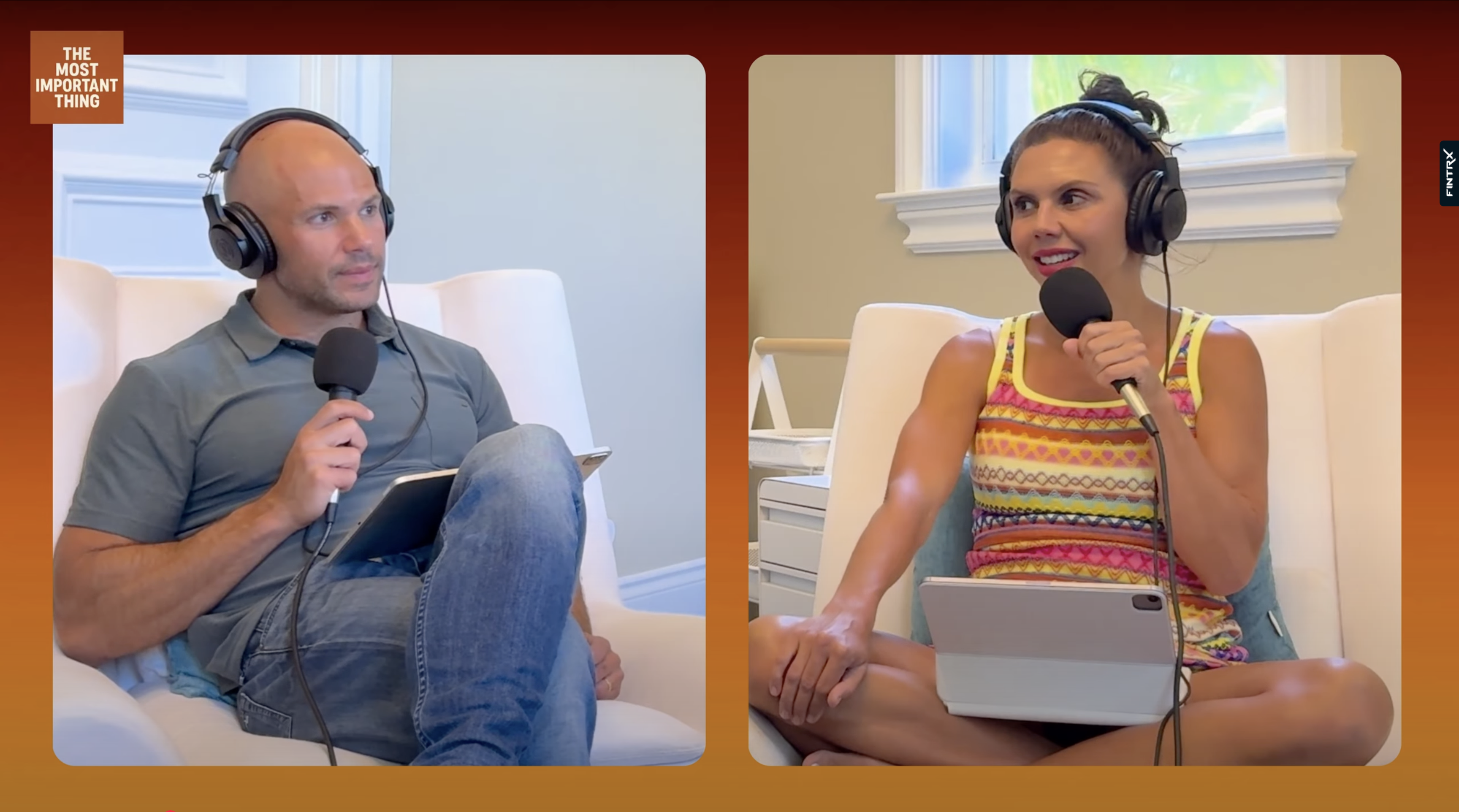


🎙️ Episode 16: Joy
“I want you to know joy, so together we will practice gratitude. I want you to feel joy, so together we will learn how to be vulnerable.” — Brené Brown, Wholehearted Parenting Manifesto
This week, we’re talking about joy—what it feels like, why it can be hard to stay with, and how we’re learning to welcome more of it into our family life.
We explore the kind of joy that sneaks up on you, the kind that’s layered with memory and meaning, and the kind that feels almost too good to fully let in. We also dig into foreboding joy (thank you, Brené), and how practicing vulnerability and gratitude helps us stay present through it.
We reflect on how joy changes when you become a parent, how to reclaim personal sources of joy, and how to make room for your kids’ joy—even when it’s loud, messy, or inconvenient. And we talk about the kinds of shared moments that bring us together as a family: the silly, the spontaneous, and the deeply connected.
💡 Episode Highlights
- Joy vs. happiness—and why it matters
- “Layered joy” and how nostalgia amplifies meaning
- Foreboding joy: dress-rehearsing tragedy when things feel too good
- Reclaiming personal joy after early parenthood
- Letting kids keep their joy—even when it’s chaotic
- The role of gratitude and vulnerability in feeling joy more fully
🎧 Listen now wherever you get your podcasts.
And if this episode resonates, text it to a friend or leave a review—we’re building this together, one honest conversation at a time.
🧡 Thanks for being here with us.
0:00 Welcome to The Most Important Thing. I'm Danielle DeMarco Neufeld. And I'm Greg Neufeld, and together we're exploring how ambitious busy families can build culture at home. Because after all, family is the most important thing. Hey everybody, welcome back to the most important thing. This is episode 16 on Joy. Joy. Yeah, it is the 7th episode in our Wholehearted Parenting Manifesto series by Brené Brown. For those of you following along at home. And the line is I want you to know joy. So together we will practice gratitude. I want you to feel joy. So together we will learn how to be vulnerable. Cool. So joy is a fun topic. We've all experienced joy, but it seems like joy is something that is harder to stay present in as we become parents. Is that kind of what the research says too? You know, I think that what Brene is talking about here is creating space to feel joy consistently and to developing a deliberate practice of joy, if you will, and that to really tap into joy as an adult.
1:07 Vulnerability and gratitude are our two cornerstones. And so I think that when you become a parent, there are so many more opportunities for joy, but also so many reasons to cut yourself off from that joy or to be too stressed or sleep deprived or decision making fatigued to tap into those moments. So it's really learning to experience joy in a new way, if you will. Yeah, I love that. And so there's a lot of self exploration around joy to be done. I did some reflecting on this topic myself yesterday.
1:48 Before we get into that, can I give the definition of joy? I think it's important to distinguish joy from happiness. So from Atlas of the Heart, Brene defines joy as sudden, unexpected, short lasting, and high intensity. Joy is characterized by a connection with God or nature or other people. And joy doesn't make us lose ourselves, but it makes us be more truly ourselves. And so I think everybody knows that feeling of joy, but just to put a finer point on it and to distinguish it from happiness. So happiness is lower intensity and more self focused than joy. With happiness, we feel a sense of being in control and it's often related to immediate environment or current circumstances. Yeah, I like that a lot.
2:32 The the gratitude that shows up for me when I am experiencing joy these days is like there's like a boomerang or a throwback to a lot of my childhood. I'm realizing as I watch our kids, for example, when we were putting together the bunk beds, I reflected on the bunk beds that my brother and I had. And we were probably 5:00 and 3:00 at the time up till maybe 10 and 8. And for a while there, I would wake up and I was in the top bunk and I would put my hand down and then my brother, if he were awake, would touch my hand to let me know that he was up. And that was a beautiful moment that I didn't really remember until I saw those bunk beds sitting in our girls room after they were fully complete.
3:22 And so now every time I walk in that room, I get this little like heart flutter burst of joy just thinking about that. And I know they're going to have so many memories of their own as a result of this structure. So it's just kind of cool to be a parent and not just see the joy in the moments that my children are are having together, but to remember some of that childhood joy that I had with my brother. I think there's a you had told me that there's a name for that, which is called layered joy. Is that? Right. Layered joy. So layered joy being the joy that you're experiencing, that I'm experiencing, and then the joy that I had experienced that is triggered by the present day joy.
4:06 Yeah, and that's definitely something that is new since becoming a parent, right? I think that that goes back to one of these terms that we've heard over and over on these episodes, which is the intergenerational self. And so this idea of now that I am a parent, I can see my childhood and my children as well. And that that brings kind of an extra layer of meaning to some of the things that are happening in our home. And so that's called layered joy. Yeah, layered joy. Cool, I like that. Yeah, it's playful in the present and rich with nostalgic warmth. It shows how new joy can reawaken old safe feelings. Safe feelings. That's interesting. Yeah, I learned a lot in this little exercise here, so I have some questions.
4:51 OK, What is something that surprised you by how much joy it brought? The first time Maverick told a funny joke recently that actually made our whole family laugh, that was a moment of pure joy for me. What was that? A couple weeks ago, we were all getting ready for bed and you had a picture come up on your phone and he looked at it and he said he was about 5 months old in the photo probably. And he looked at me and he said, Daddy, I was farting in that photo. He. Was. Like so good, so, so good. And our whole family burst out laughing and just, you know, it felt like one of those moments where he's not a baby anymore. He's not really a kid yet, but he, he felt like one of the crew in that moment.
5:37 And I felt very connected to him. And I think that Salinas can really be a connector in in a joyful way for families, certainly for our family. What about you? I realized that I get so much joy from going to the beach, but the like the ultimate moment, the, the, the moment that we're walking down the beach path and you can start to see the ocean and the sky is so blue and the clouds are so beautiful. That's like peak joy for me. I think the view is absolutely beautiful. I also think there's something magical about all of us setting out on a trail together, just journeying.
6:18 Right? Yeah. So guys, when I experience joy, I really feel it. And I really feel it to the point where I'm like tearing up and I usually hold back. I usually don't let myself go with those tears because there's something like about letting it wash over me that I feel is disarming. And like I'll even if it's a movie or whatever, I always hold it back. It's like a reflex for me. And so yesterday I was filming this moment in with my new meta Ray Bans, which I love. They bring me so much joy of of Hunter and Jade singing Taylor Swift song.
7:03 It was just so darn cute. And just watching them perform together and being sisters in pulling up to tennis, just like so many things about it. So I caught the capture that moment and I was playing it last night in bed after you fell asleep and I started to feel that like total joy. But those tears and and I was like, you know, screw it. And I just let it wash over me and like I let it go and and actually was like shaking a little bit in the best way. And then I was like, I got to share this with somebody. Who do I share this with? So I sent it to my brother and I was like, this 62nd video was the best moment of my day. And I sent it to him And right back like a minute later, he watched it and he goes mine too. And I was like, he gets it.
7:46 And that was just totally special. So thanks team met for helping me prepare for this episode through some real feeling and and real joy and. Connecting with your brother, which is so beautiful. Yeah, he's, I knew he would understand. Insane gratitude memory. Just like insane gratitude for that one. Cool. Can we talk a little bit about another type of joy? Right, that's where I wanted to go. OK, so, so on that joy, shutting it down or or holding back tears I think is another form of something that you and I've been talking about, which is foreboding joy. I think it's important topic here, especially as parents to really get into what that means. Do you want to share the definition and we can talk? About it I Renee Brown's the first person that I heard talk about this, I believe.
8:36 I don't know if she coined the term or not, but I can say that in her definition, foreboding joy is one of those practically universal experiences that everybody thinks of as something only they do. So what does it mean? Well, it typically looks like you are. I am watching my child peacefully sleep and start thinking what if something were to happen to them? Or laughing with us as a family and thinking this isn't going to last. And Brene calls this act of foreboding joy as dress rehearsing tragedy. And she notes that it is the antidote to gratitude. And I am very guilty of using these moments as an opportunity to kind of not be vulnerable and steel myself against future hardship. When she says, and I know that that doesn't work, that really the opposite is what my work is to do, which is to lean into that joy, to fully immerse myself in the present moment and to ground myself in gratitude in that experience Because, you know, maybe it won't last, but maybe we'll have 100 more. But regardless, when tough times do come, me preventing myself from fully feeling joy in these good moments isn't going to help.
9:56 And so I think this concept of foreboding joy is one that I may have experienced prior to having kids, but I, it definitely comes up more now that I have, you know, I have so much more to lose. When it was just me, it was just me, you know, And now for every moment of connectedness, there's also this flip side potential place that could go to a feeling of disconnection, right? Or what if we don't have a good relationship when they get older, right? Like I was reading with Hunter in bed last night, which is one of our favorite things to do. We just sit by side by side and read our own books. And, you know, I'll massage her arm or something while we're reading.
10:39 And it's the most lovely, peaceful, connected experience. But I can't help but think sometimes in those moments, like, what if 20 years from now, she doesn't want to talk to me, You know? And, and I know that that's not going to happen overnight. And I'm doing everything in my power to make sure that doesn't happen. But I think that my work to do is to really feel those moments of deep joy and connectedness, rather than to try to prevent myself from fully experiencing in some way of protecting myself for the future. So if you're in a moment of joy and foreboding, joy shows up. Is it a specific type of joy that triggers it more than others?
11:27 Is it something that's related to our family? Or is it just show up where it chooses? Well, I think that for me currently, foreboding joy really shows up when I'm feeling connected to the joy of one of our children, which also helps me in thinking about this, what I want to experiment with and how I would like to, how I would like to transition. I'd like to take some of my joy back, honestly. Like, I think that I talk about you and I talk about this a lot, but I had such a fully developed self when we met. I think that's probably part of what attracted you to me, right? I was 28 years old, almost 29 years old. I had I had my career, I had my friends, I had my spiritual relationship, my ways of accessing joy, which primarily consisted of dancing at clubs, Wednesday Warriors, you're still out there.
12:21 And then we met, we fell in love, we got married, we had children. COVID happened. Like I picked my head up and it's been, you know, it's been 9 years. And during that time I really collapsed my individual sense of self, right? And I'm just now trying to integrate the two, if you will. So if you can think about like the first chapter of my life being about personal deep joy, which really was that connectedness to my higher power into the universe where I strongly felt that on the dance floor and maybe in a Soul Cycle class, moving my body in the dark room to the music. There's a consistent theme here of music.
13:03 And then more recently, the joy has been around our children and watching them or connecting with them. I'd like to bring more of that individual connection with nature and higher power joy back into my life. And that one feels more sustainable too, because it doesn't involve another human being. So on the one hand, I'd like to move through foreboding joy for sure, and like, deeply use those as opportunities to stay steeped in gratitude. On the other hand, I would just like to look for more moments of personal joy. Yeah, you, you alluded to something that I think is really profound, that your children are often taking your joy away in that moment because they're so aware of your almost like you put a bubble around yourself like we all do.
13:55 We all put bubbles around ourselves in a moment of joy. And they're like, hey mom, they're popping your bubble. Well, yeah, it's a deeply vulnerable space, right? To to be unabashedly joyful is a very, at least for me, for sure. And I want, And so one thing that I would like for when we talk about joy within our family culture and in our family dynamic, while I am excited to have more shared experiences of joy, I am also committed to allowing individual joy to have space in our home and in the way that we and in the way that we commune with one another. I am definitely guilty of trying to, I won't say burst the bubble, but I will say like tighten the bubble of the joy on our children.
14:38 Like sometimes their joy is just overwhelming to me. And I wish that I was spiritually awakened enough to always recognize that and just let it, let it be. But sometimes it's like 5:00 AM and Greg's still sleeping. And I don't really think it's appropriate to be belting out wicked at the top of your lungs, even if that makes you really joyful, right? But I do think that I can, I can make more space for it. I'm not saying I'm going to go like full 100% let you always be the brightest light in the room, but I want to recognize when you and me and each of our family members are experiencing some type of personal joy and communion with spirit. Say and allow more space for that because I I want that. I hate when someone comes up to me and tells me my dance moves look weird in the kitchen.
15:33 Well, I think that there's there's the dance moves commentary, but then there's also the it's a 10 and you're supposed to be in the car 10 minutes ago and you're, you know, you haven't brushed your teeth and you're dancing on the table looking at your reflection in the TV. Like, I understand that you're getting, you know, a moment of joy here, but this is not an appropriate time to do it. Yeah, it's tricky. It's. Tricky. It's tricky. There's that, there's that kind of joy, but then there's also like this silliness joy, which I think to me is a bit more connecting. Like that's where I see when I think about joy within our family, I think about experiential opportunities, like you said, kind of all going to the beach together or walking a trail together to see a new beautiful scenic site. But then there's also just like the end of our family meeting yesterday when we played that silly game Watch your mouth, where you stick the dental things in your mouth. I don't even know what you call them. And it's just absolute ridiculousness, right? And so that's a really, we're all on the same page at the same frequency being silly together.
16:32 And that feels like the type of joy that I think really does bring family cohesion, at least to us. Yes, And anything physical that is spontaneous, where we're all in it together, that's where the magic happens. If it's too forced, it's it's someone's going to be crying. Yeah, yes, although still my favorite family meeting learning was twerking and you being the only one that could twerk. I think every single one of us really appreciated watching you booty bounce. Well, I appreciated it too. That's good. I mean, they don't get that many opportunities to see Daddy silly.
17:16 Yeah, I guess I try to only be silly. So I guess maybe I need to be less silly in order to be more, if that makes sense. I don't know. I think I sometimes show up just as trying to be silly in order to get some levity out of a situation when somebody's in their feelings. And that's not the same silliness as twerking. And. Correct. Yes, I I you do bring levity to difficult situations, I would agree. But I also think generally speaking, during the week you show up pretty tight. Yeah, no, it's true. If I may say. I'm I'm working on on that, especially as it relates to this project of ours here, because I noticed the connectedness of talking about really the reparenting, if you will, and be more connected and intentional as a father and husband and in this family.
18:16 It's it's it all works together as a as a great fluid motion. So you know, we're we're two months in and I and I can see the the little changes in me. So I'm I'm excited about this. I can. Too, for sure. Yeah, I'm grateful for them. OK, so we talked about what foreboding joy feels like and what joy feels like in your body and in your mind. But you know, in reflecting on the way that joy feels, I realized that I'm, I'm going to call myself a joy chaser. And the reason I'm going to say that is because it feels like a full body reverberation to me in the best way. It's like a hum under my skin and my eyes filled with tears. And often times I don't let myself go over the edge there. And I think that the reason I don't let myself go over the edge there is because it actually feels pretty similar, though a lot more stable to what I would call mania or hypomania. And as I kind of alluded to a few episodes back, I have bipolar disorder and I've only had a couple of hypomanic episodes and none since my diagnosis. And I take care of my body really well. I'm on medication and it's not the mania so much that concerns me, but it is an amazing feeling. And that is the analogy to joy.
19:51 But the reason that I chased joy is because the way that bipolar disorder affects me is on the depressive side. I get in a flat, low energy, very tight place when I am not feeling my best. And thank goodness for modern medicine and. Everything that I can do to manage that, but still showing up flat and low energy is my least favorite feeling. And because it's happened so much throughout my life and I only knew a couple years ago, I only found out a couple years ago what that was all about.
20:35 And so now that I have a definition there, the joy that I experience when I'm feeling good, like I can't describe how grateful I am for it. The gratitude that I have for joy is like no other. And so now that I recognize it and I understand why I care so much about it, I'm also going to get curious about it and try to feel it more thoroughly as opposed to putting up a bit of a guardrail on not not showing up as as emotional as I might want to get.
21:16 So that's just a little insight into the way that I experienced joy and running towards it, I think gives me the feeling that things are working. And if you know anything about me, I need for my gadgets and especially my body to be working. You do, you do. Thanks for sharing. Yeah. One thing that I have noticed, I would say that prior to your diagnosis, you had, is it fair to say that you would have kind of chronically, you would have chronically low periods and then you would have bouts of what I'll call hypomania, which felt really good to you. And it's interesting because the few periods of hypomania that I have experienced that you've had since we've been together prior to you being diagnosed and on medication and kind of aware of what's going on, you were incredibly vulnerable and grateful, like steeped in gratitude during those phases. It was a stark contrast to how you were in other or times of your life, right?
22:29 And but it was beautiful. It was absolutely beautiful to witness. A little scary for me because it kind of came out of nowhere and felt a little untenable, like a little bit shaky, right? And that's, you know, I think that's, that's part of why this is a, this is a disorder. This is. Yeah. But I'm really excited for you because I think that now and for a while after your diagnosis, it was OK. I'm just going to be evened out, right? I'm not going to be too low, but I'm not going to be too high. It felt, it has felt a bit robotic. And I hope you feel that I've been a supportive, loving witness to that while also periodically telling you that I don't love how robotic you are. Is that fair?
23:09 But over the past couple of months, I feel as though you're tapping into something new, which to me feels like a more sustainable way of chasing joy. Where you are aware of your diagnosis, you take your medication, you do the right things for your body and your mind to keep yourself stable, but you're now opening yourself up more to vulnerability, gratitude and joy in a way that feels stable and attainable. 100%. That's really exciting. It is exciting. There's three interconnected reasons why I think that is now available to me.
23:50 One, the robotic component serves me if I need to be operating in a very alpha investment world environment and need to show up every day with the same energy on the same Zoom calls. You know, different topics, different people, but really the same conversations over and over and show up with enough energy and enough interest to to make those land right because it sails at the end of the day. And so showing up, you know, he can't have a bad day on Zoom. And at least that's what I tell myself so I know at.
24:31 Least that's what he tells. Myself, that's what I tell myself. So now, because that is not the only version of me that is showing up in a creative setting, let's say this becomes a platform where I can show my true colors, where I'm like, oh, I haven't let anybody in in a while outside of this family. And it's because I felt slightly embarrassed by how good things are on the inside. And I felt like for a while, everyone that I was talking to was struggling. And I realized that's not the case. There are so many wonderful, ambitious people out there that are vulnerable, that are raising families that are being good parents, good husbands, good wives, like good, good children to their parents that it's just the world is so much bigger than the world in which I operate in on day-to-day for, for business. And I'm, I'm excited to build those kinds of connections. So I need to show up with my full self in order to do that. And then #3 is for you and the kids. Because setting an example for them of what good looks like, of what being a good husband and father looks like is not just about being a provider.
25:46 It's about showing up with intention. Just in the same way that I would for a Zoom meeting as I will for family meeting. And up until I had this platform, I don't think that I was able to do that because I felt like all my eggs we're in the basket. I'm not talking financially. I mean, I from an identity perspective of being a venture capitalist and of being somebody that needed to button up a little bit in order to go and raise another fund and in order to find another company. What I realized is showing up as my whole self will actually allow me to achieve all of these things and more.
26:27 And it's really thanks to the exploration of these topics that I'm able to do so. So thank you for leading us on this journey. Thank you for joining me. It's not lost on me that some of these podcasts end up being mini therapy sessions as a few people have a. Few people have said these are Greg therapy sessions, but me too. Yeah. Thanks for listening guys. But I but I hope it's setting. I'm not trying to put a spotlight on any struggle or or triumph of mine or our families. Trying to share that it's OK to share. Yeah, I mean, this is really what we want to do, right, Is just talk more about family and about family culture. Because yes, you are a general partner at a venture fund. And if you were to go on a podcast right now about data, you probably would say something like, yeah, family is the most important thing and then keep it moving, right? So this is just an opportunity for us to I hate this term, but double click on what's going on at home and how that really how that really matters.
27:35 I would like to take some accountability also for your quote, robotic nature over the past couple of years, because quite frankly, our family was not in a place for you to experiment too much. And I'm grateful for you for being our rock, being a steady source. You, I think, put yourself, yourself exploration on the back burner for the past number of years because we needed you to. And I'm grateful that we are in a I'm grateful for that. You did that. And I'm grateful that we are now in a place where we're able to make room for your exploration.
28:15 Yeah, thank you. Me too. We're a great team. Thank goodness. Yeah. OK. What else? So joy. Yeah, Joy. We can experience it more. If we're vulnerable and practice gratitude. What do you think the most important thing about joy is? Yeah, I think that the so I think that the most important thing about joy is to recognize that it is a deeply vulnerable state and that we need that. I need to lean in to the vulnerability that begets joy and that really allows it room to grow. And that there are different types of joy that I'm experiencing today.
29:01 That I want to continue to have my personal joy that really is this, this freedom that feels connected to spirit nature, my higher power. But that also I am going to eat up every moment that I can with our family where there are the silly moments and the sweet moments that are happening inside of this young family today. Yes, and I resolve to talk to each of our kids about what brings them the most joy and how we can create that bubble that that environment for them to thrive without someone coming along and popping that bubble. I like it, Yeah.
29:44 I think it's important to understand well. Well, I do think that joy is a natural outpouring of childhood. I think it is important to share what we can with our children about the things that that create the circumstances for more sustained joy and that being gratitude and vulnerability. Yep. So we'll report back and I hope that others can have their own joy interviews too 'cause this has been enlightening to understand both the things that I suspected but needed to confirm about your joy and your your foreboding joy and to be a little vulnerable and sharing where I'm coming from as it relates to this wonderful, beautiful feeling.
30:27 Yeah, I love it. OK, till next time. Yeah, love you, Goosy. Love you goosy. Hey guys, if you're still here, you're definitely our kind of person. Thanks for spending this time with us on The Most Important Thing. If this episode resonated with you, we'd love for you to follow us wherever you get your podcasts and share it with someone else. Building family culture on purpose.